Sri Lanka Plans to Exit IMF Programme in 2027
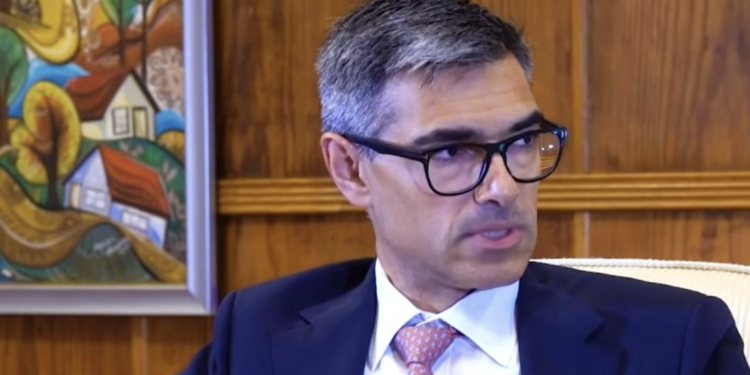
COLOMBO – Sri Lanka intends to complete its current International Monetary Fund (IMF) programme when the four-year Extended Fund Facility (EFF) expires in March 2027 and does not currently plan to seek a successor programme linked to debt restructuring, Minister Bimal Rathnayake has said.
Rathnayake said the government would end the present IMF arrangement but would continue normal engagement with the Fund and the World Bank as part of Sri Lanka’s participation in the international economic system.
“We will definitely exit this agreement,” Rathnayake said in a television interview. He added that the IMF and World Bank remained international institutions with which Sri Lanka would continue to deal according to the country’s requirements.
The existing 48 month EFF was approved by the IMF Executive Board in March 2023 and is scheduled to expire on March 19, 2027. The arrangement was approved for SDR 2.286 billion, equivalent to about US$3 billion at the time of approval.
Two reviews remain
Sri Lanka still has work to complete under the existing programme.
The IMF’s September 10-23 mission held discussions with the government on the seventh review of the EFF and the 2026 Article IV Consultation. The mission concluded without a staff-level agreement, although the Fund said discussions would continue in the near term toward agreement on the policies and parameters required to complete the seventh review. IMF
The IMF’s programme schedule provides for a seventh review based on end-June 2026 performance and an eighth and final review based on end-December 2026 performance, with the latter scheduled for March 2027. IMF eLibrary
IMF Mission Chief for Sri Lanka Evan Papageorgiou has indicated that any decision to request a successor programme would ultimately be a decision for the Sri Lankan authorities.
Rathnayake said the government did not currently anticipate the need for another IMF programme associated with debt restructuring. At the same time, he acknowledged that Sri Lanka would remain subject to its existing debt-servicing obligations for years after the current IMF arrangement ends. Hiru News
Government questions debt-restructuring terms
Rathnayake also criticised aspects of Sri Lanka’s debt restructuring arrangements negotiated under the previous administration.
He particularly pointed to mechanisms under which payments to certain creditors can vary according to the country’s economic performance. Rathnayake argued that stronger economic growth could result in higher repayment obligations and potentially reduce the resources available for distributing the benefits of growth among the public.
“If we grow the economy, the amount of debt we have to repay increases,” he said, according to reports of the interview. FrontPage+1
The minister said the government was examining financial-market mechanisms that could minimise what it regards as the adverse effects of some of those existing debt terms. He did not, however, publicly identify the specific instruments being considered. LankaNewz
IMF says economic risks remain
The government’s plans for the post-IMF period come as the Fund continues to emphasise the need for policy discipline and structural reform.
In its September 23 statement, the IMF said Sri Lanka’s economy had remained resilient despite successive shocks. Economic activity expanded by 4.2% year-on-year in the second quarter of 2026, while official reserves reached US$6.9 billion at the end of August. The Fund also said banks remained well capitalised and profitable and that debt restructuring was largely completed. IMF
However, the IMF warned that risks remained tilted to the downside, citing uncertainty over the duration and intensity of the Middle East conflict, global trade policy and the potential impact of El Niño. IMF
The Fund has called for continued efforts to strengthen government revenue, including through a medium-term revenue strategy, broader tax compliance and improved revenue administration. It has also stressed the importance of maintaining energy cost-recovery pricing and improving the implementation of capital investment. IMF
On monetary policy, the IMF said greater exchange-rate flexibility would be important for absorbing external shocks and rebuilding reserves. It also said Sri Lanka should maintain its existing 5% inflation target and accountability band at the first statutory review of the inflation-targeting framework. IMF
The Fund further urged the authorities to maintain momentum on structural reforms, including trade liberalisation, modernisation of business and labour regulations, wider access to finance and digitalisation.
A transition beyond IMF financing
The government’s stated position does not amount to an end to Sri Lanka’s relationship with the IMF. Rather, it signals an intention to complete the current financing arrangement and then continue dealing with the Fund without immediately seeking another IMF-supported programme.
That distinction is significant as Sri Lanka moves from crisis stabilisation towards longer-term economic recovery.
The IMF said in May, after completing the combined fifth and sixth reviews, that debt restructuring was nearing completion but that debt-sustainability risks remained high. The Fund also said Sri Lanka was expected from 2027 to return to a primary-balance target of 2.3% of GDP, alongside compliance with a primary-expenditure ceiling. IMF
For the government, the challenge will therefore extend beyond formally completing the EFF. It will have to maintain fiscal and monetary discipline, meet debt obligations and build reserves while pursuing economic growth without relying on another IMF financing arrangement.
For now, however, the immediate task remains the completion of the existing programme. The IMF and Sri Lankan authorities are continuing discussions aimed at reaching a staff-level agreement on the seventh review, with the final review scheduled for the period leading up to the programme’s March 2027 expiry.