Trump Escalates Feud with Pope Leo XIV, Calling First American Pontiff “Weak”
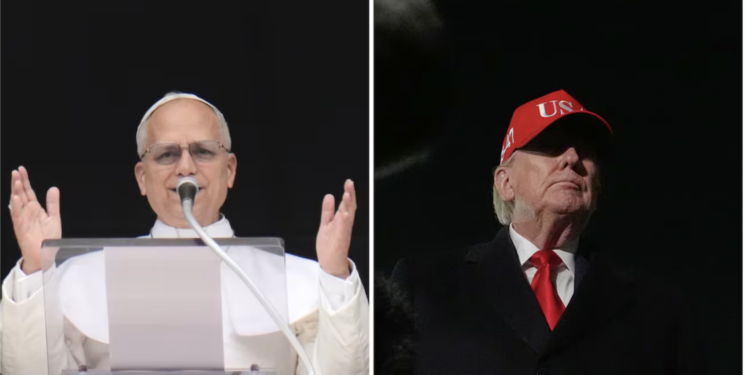
WASHINGTON D.C. In an unprecedented clash between the White House and the Holy See, President Donald Trump launched a scathing social media attack against Pope Leo XIV on Sunday, accusing the first American-born pontiff of “catering to the Radical Left” and being “weak” on global security.
The vitriolic exchange marks a new low in a relationship that has rapidly deteriorated since the outbreak of the U.S.-Israel war with Iran.
A Digital Broadside
The President took to social media Sunday morning to voice his displeasure, targeting the Pope’s recent calls for de-escalation.
“Pope Leo is WEAK on Crime, and terrible for Foreign Policy,” Trump wrote. “I don’t want a Pope who thinks it’s OK for Iran to have a Nuclear Weapon.”
The President doubled down on these remarks later in the day. After Air Force One touched down outside Washington following a trip to Florida, Trump addressed a scrum of reporters, reinforcing his stance. “We don’t like a pope who says it’s OK to have a nuclear weapon,” Trump said. He further dismissed the pontiff’s ideological leanings, stating, “He’s a very liberal person… I’m not a fan of Pope Leo.”
The Catalyst: “Delusion of Omnipotence”
The escalation follows a weekend address by Pope Leo XIV in which he denounced the “delusion of omnipotence” currently fueling the conflict in the Middle East. While the Pope did not mention President Trump by name, his message was a clear rebuke of the administration’s rhetoric.
The Vatican’s stance has centered on:
- Immediate Ceasefire: Demanding that political leaders stop military actions.
- Negotiated Peace: Urging a return to the diplomatic table.
- Critique of Exceptionalism: Challenging the use of religious justification for military superiority.
A Fragile Peace in the Balance
The timing of the President’s attack is particularly sensitive. As Trump issued his critiques, Leo XIV was presiding over an evening prayer service in St. Peter’s Basilica the same day the U.S. and Iran began face-to-face negotiations in Pakistan under a fragile ceasefire.
While the Pentagon and the Vatican have both denied reports of a “heated meeting” with the Church’s U.S. representative, the public friction suggests a deep divide between the administration’s “maximum pressure” campaign and the Vatican’s traditional role as a global peacemaker.
For the first American pope in history, the conflict represents a unique challenge: navigating a domestic political landscape that is increasingly hostile to his calls for international restraint. For the President, the feud serves as a signal to his base that his “America First” policy extends even to the highest echelons of religious authority.