The Bishnoi Indictments Are a Wake-Up Call Canada Can No Longer Ignore
The sweeping U.S. indictments unsealed this week should serve as a moment of reckoning for Canada. For years, extortion, targeted shootings, gang violence and political intimidation linked to India-based organized crime networks have spread across Canadian cities. Business owners have reported threats demanding hundreds of thousands of dollars. Homes and businesses have been sprayed with bullets. Vehicles have been torched. Families have lived under constant fear. Yet many Canadians viewed these incidents as isolated gang disputes affecting only a small segment of the population.
The latest U.S. indictments tell a different story.
According to American prosecutors, the alleged Lawrence Bishnoi criminal organization evolved into a sophisticated transnational network operating across Canada, the United States, Europe and Australia. From behind prison walls in India, investigators allege Bishnoi directed an organization involved in contract killings, extortion, drug trafficking, firearms smuggling and political assassinations.
Most striking is the allegation that Bishnoi and his close associate, Goldy Brar, ordered the 2023 assassination of Sikh activist Hardeep Singh Nijjar outside a Surrey gurdwara. Nijjar’s killing was not simply another gangland shooting. It became one of the most significant national security and diplomatic crises in modern Canadian history after Prime Minister Justin Trudeau publicly stated that Canadian intelligence had linked agents of the Indian government to the murder—an allegation India continues to deny.
The new indictments do not settle that diplomatic dispute. They do, however, reinforce what Canadian law enforcement has been warning for years: organized crime networks with international reach have established deep operational roots inside Canada.
Perhaps the most disturbing aspect of the indictments is how these organizations allegedly recruit their workforce.
Prosecutors allege vulnerable young men in India, including minors, were recruited with promises of opportunity before travelling abroad on student or temporary work permits. Once in countries such as Canada, some allegedly became foot soldiers responsible for extortion, shootings, transporting firearms and carrying out violent attacks.
Canada’s immigration system was designed to attract students, skilled workers and future citizens—not to become a logistical pathway for international criminal organizations. The overwhelming majority of international students contribute positively to Canadian society and obey the law. But these allegations expose weaknesses that criminal organizations appear willing to exploit. Strengthening screening and intelligence cooperation should not be viewed as an attack on immigration; it is essential to preserving the integrity of the system.
Equally alarming is the scale of the alleged extortion campaign.
Business owners in Surrey, Brampton, Edmonton and other cities have repeatedly reported receiving threatening phone calls demanding enormous sums of money. Those who refused allegedly faced shootings, arson attacks and death threats directed at both themselves and their families.
These are not victimless crimes confined to gang circles. They target ordinary Canadians attempting to operate legitimate businesses. Fear spreads quickly through communities when criminal organizations demonstrate they can strike at homes, workplaces and places of worship.
The indictments also highlight another uncomfortable reality: Canada’s borders remain attractive to sophisticated international trafficking networks.
According to investigators, hundreds of kilograms of cocaine and methamphetamine were allegedly transported into Canada each week using commercial trucking routes. Authorities further allege that confidential information regarding border inspections may have been leaked from within the Canada Border Services Agency.
If proven, such allegations raise troubling questions about institutional vulnerabilities and organized crime’s ability to infiltrate or corrupt critical public institutions.
The investigation itself offers an important lesson.
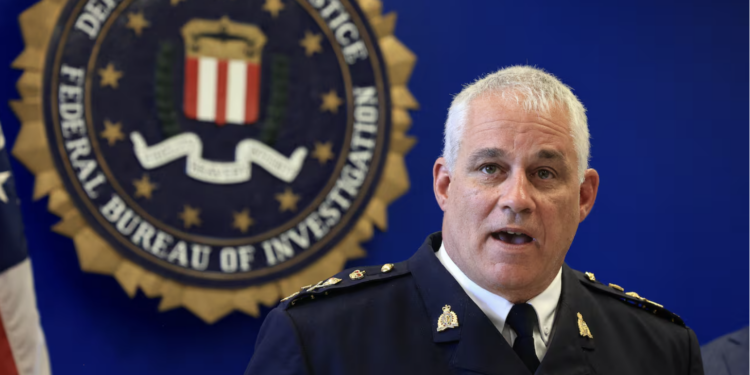
Operation Hard Ball was not solely a Canadian success story. It relied upon extraordinary cooperation between the RCMP, the FBI and police agencies in Mexico, France and Spain. In today’s world, criminal organizations operate across continents, exploiting technology, immigration systems, international banking and encrypted communications. Law enforcement must be equally international in its response.
Canada should welcome, not resist, deeper intelligence sharing and joint enforcement operations with trusted allies.
But enforcement alone is not enough.
Governments at every level must ensure that victims of extortion receive meaningful protection. Many victims remain reluctant to report threats because they fear retaliation or believe authorities cannot protect them. Without community trust, organized crime flourishes in silence.
The federal government must also invest more aggressively in organized crime investigations, witness protection, financial crime enforcement and intelligence capabilities. Disrupting these organizations requires more than arresting individual gunmen. It demands dismantling the financial, logistical and international networks that allow criminal leaders to continue issuing orders from prison cells thousands of kilometres away.
The indictments represent allegations, not convictions, and every accused individual is entitled to due process and the presumption of innocence. Yet the breadth of the evidence presented by U.S. prosecutors cannot be dismissed lightly.
Canada has long viewed itself as a safe, open and welcoming society. Those values remain strengths. But openness must never become vulnerability.
The allegations revealed this week demonstrate that transnational organized crime has evolved beyond traditional gang violence. It now intersects with immigration, national security, international diplomacy and public confidence in Canadian institutions.
This is no longer solely a policing issue.
It is a national security challenge.
Canada cannot afford to treat it as anything less.