European Lawmakers Call for FIFA Investigation Over Trump-Linked Red Card Reversal
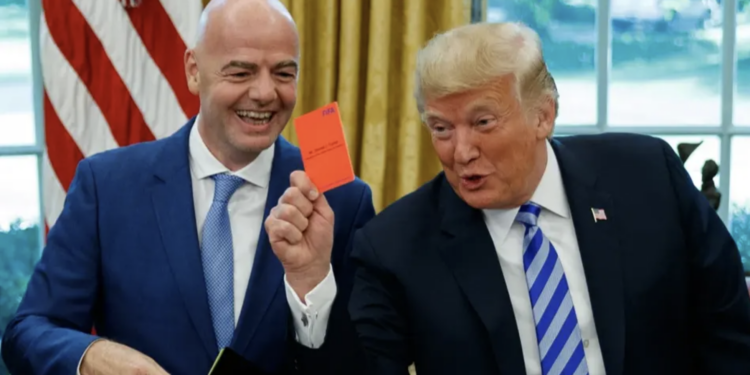
A growing political controversy has engulfed FIFA after dozens of members of the European Parliament called for an investigation into FIFA President Gianni Infantino over his alleged role in overturning the suspension of U.S. striker Folarin Balogun. The lawmakers have raised concerns that political pressure from U.S. President Donald Trump may have influenced FIFA’s decision, prompting renewed scrutiny of the governing body’s commitment to political neutrality.
In a letter sent Wednesday to the presidents of European Union football associations, 72 members of the European Parliament urged national football federations to support calls for an independent investigation into whether Infantino played any role in reversing Balogun’s one-match suspension and whether intervention from the U.S. administration affected the outcome.
The lawmakers argued that football associations have a responsibility to uphold the integrity of the sport and hold officials accountable when rules appear to have been compromised. They specifically cited FIFA’s statutes and Code of Ethics, which require the organization to remain politically neutral, emphasizing that any perception of political interference threatens the credibility of world football.
The controversy stems from the United States’ Round of 32 match against Bosnia and Herzegovina, during which Balogun received a red card that automatically ruled him out for the remainder of the match and the following fixture. Days later, however, FIFA exercised its disciplinary discretion to suspend the one-match ban, allowing Balogun to return for the Americans’ knockout clash against Belgium. Although the United States was ultimately eliminated, the decision sparked widespread criticism from football officials and governing bodies.
FIFA defended its move by citing provisions within its disciplinary code that permit the organization to fully or partially suspend disciplinary sanctions under certain circumstances. Critics, however, questioned both the timing and the reasoning behind the reversal.
The debate intensified after President Trump publicly confirmed that he had personally contacted Infantino following Balogun’s dismissal and requested that the case be reviewed. Trump later celebrated the decision on Truth Social, thanking FIFA for “doing what was right” by reversing what he described as “a great injustice.”
Infantino acknowledged speaking with Trump but firmly denied influencing the disciplinary process. In a statement released by FIFA, he said he informed the U.S. president that the matter was being handled by FIFA’s independent judicial bodies and would be decided according to established procedures. Infantino maintained that the organization’s disciplinary system operates independently and insisted he would always respect that principle.
Nevertheless, the explanation has done little to quiet criticism across Europe.
UEFA, European football’s governing body, strongly condemned the decision, describing the reversal as one that “crossed a red line.” The organization warned that if the certainty and consistency of football’s rules can be altered, the integrity of the game and the credibility of international competitions are placed at risk.
The latest appeal from European lawmakers follows another letter sent only days earlier by 50 members of the European Parliament. In that correspondence, lawmakers backed an ethics complaint filed by the nonprofit organization FairSquare over FIFA’s decision to award President Trump the inaugural FIFA Peace Prize in December.
The lawmakers described the award as one of the tournament’s most troubling developments and urged FIFA to fully investigate the ethics complaint. They argued that the organization must demonstrate its commitment to fairness, equality, and respect for human dignity by addressing concerns over the decision.
Infantino presented Trump with the FIFA Peace Prize in recognition of what he called the U.S. president’s “exceptional and extraordinary actions to promote peace and unity around the world.” He praised Trump as a leader who “cares about the people.”
The award itself generated significant international criticism, with many questioning whether it aligned with FIFA’s ethical standards and political neutrality. Infantino has since defended the decision, insisting it was made independently and was consistent with FIFA’s values.
Taken together, the two letters from European lawmakers reflect mounting pressure on FIFA’s leadership and growing concerns that the world’s governing body for football may be allowing political relationships to influence decisions that should remain independent. Whether those calls result in a formal investigation remains uncertain, but the controversy has intensified debate over governance, transparency, and the integrity of the sport at the highest level.