Russia Ends Missile Moratorium Amid Rising Tensions with NATO and the U.S.
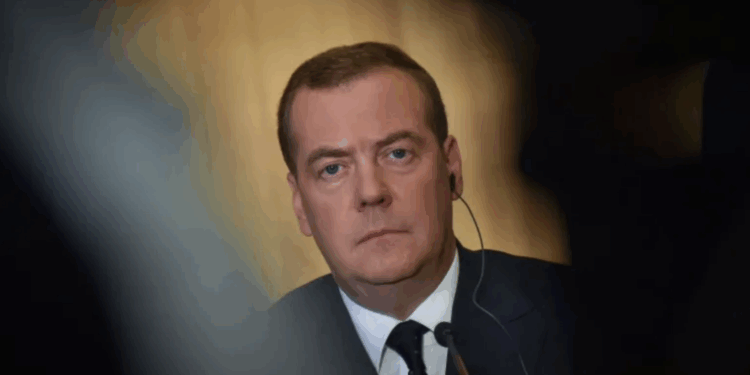
Russia has officially abandoned its unilateral moratorium on the deployment of intermediate- and short-range nuclear missiles, a move that signals a further escalation in Moscow’s deteriorating relations with NATO and the United States.
The Russian Ministry of Foreign Affairs announced the decision on Monday, citing the “developing situation” in Europe and the Asia-Pacific as justification. The ministry pointed specifically to the reported U.S. plans to deploy similar missile systems in both regions.
“Since the situation is developing towards the actual deployment of U.S. made land-based medium- and short-range missiles in Europe and the Asia-Pacific region, the Russian Foreign Ministry notes that the conditions for maintaining a unilateral moratorium on the deployment of similar weapons have disappeared,” the statement said.
Medvedev Blames NATO, Warns of “Further Steps”
Dmitry Medvedev, former Russian president and current deputy head of the Security Council, attributed the move directly to what he called NATO’s “anti-Russian policy.” In a statement posted on X (formerly Twitter), Medvedev warned of further retaliation.
“This is a new reality all our opponents will have to reckon with. Expect further steps,” he wrote in English, without elaborating on what those steps might include.
Medvedev has become known for his increasingly hardline rhetoric and frequent provocations on social media, particularly aimed at Western leaders, including former U.S. President Donald Trump.
U.S.-Russia War of Words Escalates
The announcement has fueled tensions already simmering between Washington and Moscow. In response to Medvedev’s recent threats, Trump claimed last week that he had ordered two U.S. nuclear submarines to be repositioned to “the appropriate regions,” a move widely interpreted as a warning to Moscow.
The Kremlin, however, downplayed Trump’s comments. “In this case, it is obvious that American submarines are already on combat duty. This is an ongoing process,” Kremlin spokesman Dmitry Peskov told reporters Monday. “We would not want to get involved in such a controversy… Everyone should be very, very careful with nuclear rhetoric.”
End of an Era: The INF Treaty and Its Collapse
The current standoff stems in part from the collapse of the Cold War-era Intermediate-Range Nuclear Forces (INF) Treaty. Signed in 1987 by U.S. President Ronald Reagan and Soviet leader Mikhail Gorbachev, the treaty banned ground-launched nuclear missiles with ranges between 500 and 5,500 kilometers.
The U.S. withdrew from the treaty in 2019 during Trump’s first term, citing violations by Moscow. Although Russia denied any wrongdoing, it initially pledged not to deploy similar weapons unless the U.S. did so first. That position now appears to have changed definitively.
Russian Foreign Minister Sergey Lavrov foreshadowed the shift last December, saying the moratorium was “practically no longer viable” and accusing Washington of “arrogantly ignoring” warnings from both Moscow and Beijing.
Global Implications
The breakdown of nuclear arms control agreements and the return of intermediate-range weapons to Europe and Asia could reignite an arms race not seen since the Cold War. The Kremlin’s announcement comes at a time of heightened global tension, as Western nations debate further sanctions on Russia and pressure mounts over the war in Ukraine.
Former President Trump has threatened to impose fresh sanctions on buyers of Russian oil—including India and China—unless Russian President Vladimir Putin agrees to a ceasefire by the end of this week. But Putin, speaking last week, indicated that Russia has momentum in Ukraine and that any peace talks have made only “some positive progress,” suggesting that no major policy shift is imminent.
Looking Ahead
With both sides digging in, arms control efforts between the U.S. and Russia appear to be in a state of collapse. Experts warn that the dismantling of agreements like the INF treaty leaves the world more vulnerable to miscalculation and conflict.
For now, the message from Moscow is clear: the era of restraint is over. What comes next may depend not only on strategic decisions in Washington and Moscow but also on how NATO, China, and other regional players respond to this new phase in global security dynamics.