Zelenskiy-Trump Rapprochement Offers Hope—but Peace Remains Elusive
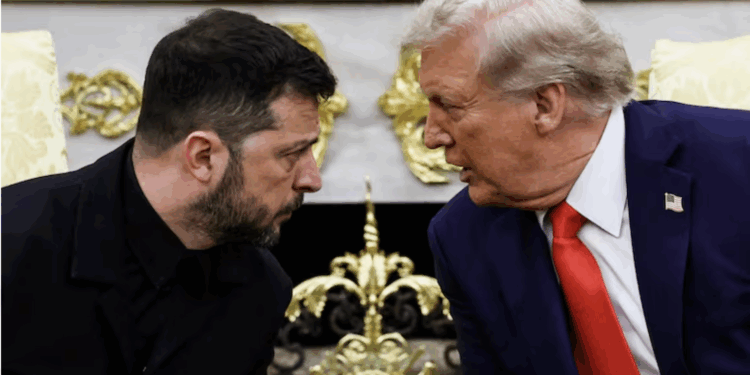
At a high-stakes international summit, Ukrainian President Volodymyr Zelenskiy stood flanked by leaders of Germany, France, and Britain. But it was his unexpectedly warm rapport with U.S. President Donald Trump that stole the spotlight, marking a striking contrast with their disastrous Oval Office encounter in February.
Yet for all the diplomatic choreography, the road to a lasting peace in Ukraine remains treacherous. While Zelenskiy may have avoided a diplomatic rupture, the brutal war drags on, and the political costs of compromise may soon come due.
A Fragile Thaw in U.S.-Ukraine Relations
“The good news is that there was no blow-up at the White House,” said John Foreman, a former British defense attaché to Kyiv and Moscow. “Trump didn’t demand Ukrainian capitulation nor cut off support. The mood music was positive, and the transatlantic alliance lives on.”
But optimism is tempered by ambiguity. Trump has yet to clarify the nature of U.S. security guarantees for Ukraine and has already retreated from demanding a ceasefire as a precondition for peace talks. Most alarmingly for Kyiv, the U.S. president has told Ukraine to abandon hopes of reclaiming Crimea and forget about NATO membership, both longstanding Ukrainian goals.
Zelenskiy, for his part, acknowledged the uncertainty. He said on Tuesday that Ukrainian officials were working to define the content of the promised security guarantees. NATO Secretary General Mark Rutte confirmed that while NATO membership was off the table for now, discussions were ongoing around “Article 5-type” guarantees, short of full membership but designed to deter further Russian aggression.
War Continues Despite Diplomacy
Even as world leaders met, Ukraine endured one of the heaviest attacks in recent weeks. The Ukrainian air force reported that Russia launched 270 drones and 10 missiles overnight—the largest assault this month. The central Poltava region, home to the country’s only oil refinery, was hit especially hard, igniting massive fires and straining an already fragile energy infrastructure.
The scale of the attack served as a brutal reminder that battlefield realities continue to shape diplomacy. More than 1 million people have been killed or wounded since the war began, according to analysts.
No Clear Path to Peace
Russia remains noncommittal on negotiations. While Foreign Minister Sergei Lavrov said Moscow was open to discussions “in any format,” he also stressed that a meeting between President Putin and Zelenskiy “must be prepared with utmost thoroughness” a diplomatic way of saying: not yet.
Adding to the complications, Putin has insisted on “red lines” that remain non-negotiable, including a total rejection of NATO forces on Ukrainian soil and continued demands for Ukrainian territory, including land Russia doesn’t even currently control.
Last Friday, after his own summit with Trump in Alaska, Putin reiterated these demands and offered no indication of compromise.
“It’s hard to imagine any deal that satisfies both Ukraine and Europe’s red lines while also being acceptable to Russia,” said Matthias Matthijs, a senior fellow at the Council on Foreign Relations. “At best, these talks mirror Trump’s trade negotiations: narrowly avoiding catastrophe but falling far short of any real progress.”
European Allies Walk a Tightrope
Europe’s role remains critical, but also fraught. While some European leaders expressed cautious optimism, others remain wary of Trump’s unpredictable approach.
German Foreign Minister Johann Wadephul stressed the need for pressure. “President Trump has now opened the door to the negotiating room. Putin must now enter it. If not, sanctions must be intensified.”
Meanwhile, former Russian President Dmitry Medvedev mocked the Western leaders’ efforts, claiming on X (formerly Twitter) that Zelenskiy and his allies had “failed to outplay” Trump, accusing Europe of groveling to the American president.
The “Coalition of the Willing”
On Tuesday, Ukraine’s allies convened under the “Coalition of the Willing” format to chart the way forward. While the group reaffirmed support for Ukraine, the challenge remains to define what that support entails, particularly in the absence of a clear NATO pathway.
Eurointelligence, a prominent policy analysis group, noted that the future depends as much on Western capabilities as on Russian intransigence. “There is, of course, the question of what Russia will accept. But also, what Western countries are willing, and able, to do for Ukraine.”
Orysia Lutsevych, a research fellow at Chatham House, warned that even as the worst-case scenario a Trump-Putin deal over Ukraine’s head was averted, risks remain.
“A bilateral with Putin is dangerous for Zelenskiy. Even if it happens, which is highly unlikely, Putin will blame him for obstructing peace,” she said. “And in such a case, the question becomes: who does Donald Trump trust—and who will he blame if his peacemaking fails?”
A Precarious Moment
Monday’s summit may have bought Ukraine time and preserved Western unity for now. But the absence of clear security guarantees, the continuation of Russian attacks, and unresolved territorial disputes mean that peace remains a distant prospect.
For Zelenskiy, the challenge ahead is formidable: navigating between Russian demands, Western hesitations, and domestic expectations in a nation battered by years of war. The diplomatic door may have cracked open, but what lies beyond it remains perilously unclear.