Why Is the World Silent? The Escalating Genocide of Christians in Nigeria and the Global Indifference
In the quiet rural villages of Benue State, Nigeria, more than 200 Christians were brutally murdered in June 2025. These weren’t isolated killings. They were part of a wave of Islamist militant attacks, calculated, brutal, and meant to terrorize and cleanse. In their wake, thousands were left displaced, hungry, traumatized, and unseen.
And the world? Silent.
Despite the staggering scale of the violence, there have been no major protests in Western capitals. No global outrage. No viral hashtags. No televised speeches by world leaders condemning the atrocities. The same global community that quickly mobilizes for other crises seems eerily unmoved by what many human rights observers are calling a slow-motion genocide of Nigerian Christians.
The Reality on the Ground
Since 2009, Nigeria has been under siege by jihadist groups, Boko Haram, ISWAP (Islamic State West Africa Province), and Fulani militant herdsmen, with an explicit agenda to establish an Islamic caliphate and destroy non Muslim communities in their path.
According to data from Intersociety, at least 7,000 Christians have been murdered in Nigeria in the first 220 days of 2025 alone, and 32 are killed every single day. That number doesn’t include the thousands who have been kidnapped, raped, or forced to flee their ancestral homes. Nearly 15 million people, mostly Christians, are now displaced within the country.
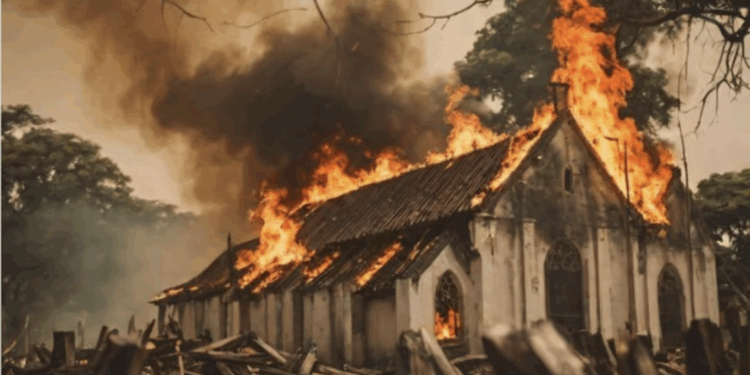
Entire communities have been erased. Over 19,000 churches have been destroyed, looted, or shuttered since 2009. In some regions, the Christian presence is nearing extinction.
These are not just religious attacks, they are attacks on identity, culture, and human dignity.
Why No Protests?
- Media Blindness or Bias?
Despite the horrifying statistics, mainstream global media have barely covered these atrocities. When they do, reports are often buried under headlines about political corruption or generalized “banditry,” effectively downplaying the religious aspect of the violence. Imagine if these victims were from any other globally vocalized minority, would the world be as silent? - Race and Geography
There’s an uncomfortable truth to confront: Nigeria is in sub-Saharan Africa. Its victims are Black, Christian, and poor. In the geopolitical calculus of the West, this often translates to “less urgent.” Mass killings in European or Western countries receive wall to wall coverage and international response within hours. In Nigeria? The silence is deafening. - Fear of Religious Tensions
Some international bodies avoid discussing the persecution of Christians by Islamist militants for fear of stoking religious conflict or being accused of Islamophobia. This hesitancy, while understandable, has tragic consequences it means Christian persecution is often downplayed or ignored altogether. - Strategic Silence
Nigeria is an economic and military powerhouse in Africa. For many Western governments, maintaining diplomatic and economic ties takes precedence over raising uncomfortable human rights issues. As a result, human lives are bartered for geopolitical convenience.
The Nigerian Government’s Complicity
The violence continues, in part, because the Nigerian government has consistently failed to act decisively.
Under former President Muhammadu Buhari, a Muslim Fulani man, many accused the government of turning a blind eye, if not outright enabling the actions of Fulani herdsmen. Though President Bola Tinubu promised reforms, little has changed. Attacks continue to go unpunished. Security forces remain absent or ineffective. In some cases, they are even implicated in the crimes.
According to Intersociety, there is growing evidence that elements within Nigeria’s military and police are complicit in kidnappings, murders, and disappearances, particularly of Christian leaders and dissidents in southeastern states.
Faith Under Fire
The killing of Fr. Mathew Eya on Sept. 19, 2025, was not a random act of violence. He was ambushed by gunmen who shot out his tires, then executed him at point-blank range. He’s one of at least 250 Catholic priests kidnapped since 2015, many of whom were tortured, killed, or remain missing. Hundreds more Protestant pastors and other clergy have also been targeted.
It’s not just men. Women and girls are kidnapped, raped, and forced into marriage or slavery. Christian children are targeted in schools, villages, and even churches.
This is systematic religious persecution.
The Hypocrisy of Selective Outrage
The West has protested for far less. When religious minorities are attacked in some countries, activists flood the streets in major cities. Governments issue sanctions. Celebrities tweet. Hashtags trend. But when 200 Christians are massacred in Nigeria? When 7,000 are killed in under eight months? When 19,000 churches are burned? The response is a deafening void.
Why are there no rallies in Washington, London, or Paris?
Where is the international community that champions human rights?
Where are the Christian leaders in the West, who so passionately speak on cultural issues but fall silent when their brothers and sisters are being exterminated?
What Needs to Happen Now
- Global Acknowledgment of Christian Persecution
This is not “ethnic conflict” or “general banditry.” It is religious genocide, and the world must call it by its name. - International Pressure on Nigeria’s Government
Nigeria’s leaders must be held accountable. Aid and trade deals should be contingent on meaningful human rights reforms and protection of minority communities. - Independent Investigations
The UN, African Union, and international human rights organizations must launch independent inquiries into the killings, disappearances, and military complicity. - Churches and Faith-Based Groups Must Speak Up
Global Christian leaders need to use their platforms to amplify what is happening in Nigeria. Silence is complicity. - Support for the Victims
We must support credible organizations on the ground, like Open Doors and Intersociety, who are providing food, shelter, medical aid, and spiritual support to displaced Nigerian Christians.
The Clock Is Ticking
If this trend continues, experts warn Christianity could be erased from Nigeria by 2075. That’s not alarmism, that’s data-driven reality.
This is not just about Nigeria. It’s about the global community’s willingness to defend the dignity and lives of the persecuted, regardless of geography, race, or religion.
Until the world opens its eyes and speaks out, the massacres will continue. The silence will grow louder. And the blood of the innocent will continue to stain the soil of a nation that once was home to one of Africa’s most vibrant Christian populations.
So, ask yourself: Why are there no protests about this?
And more importantly: Will you be silent too?