Iran and Israel Exchange Direct Strikes as Region Edges Toward Wider Conflict
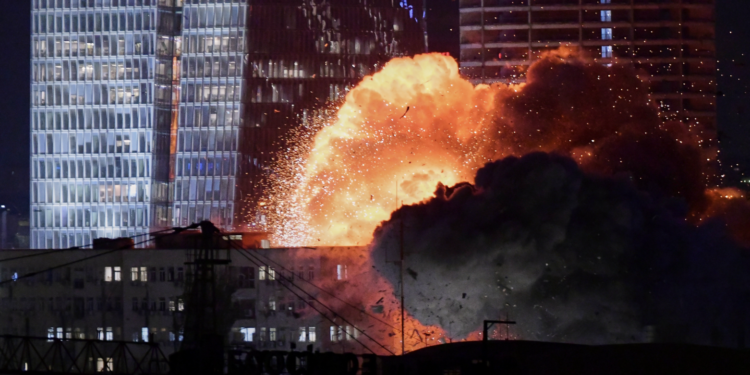
Second Wave of Iranian Missiles Follows Israeli Attacks on Iranian Cities and Continued Fighting in Lebanon
The Middle East moved dangerously closer to a broader regional war on Sunday night after Iran launched multiple waves of missiles toward Israel, while Israel simultaneously carried out strikes inside Iranian territory and continued military operations in Lebanon.
Israel’s military confirmed that Iran launched a second wave of missiles toward Israeli territory, triggering air raid sirens across large parts of the country. The latest barrage came hours after an initial round of Iranian ballistic missile attacks that Tehran described as retaliation for Israeli actions in Lebanon.
Israeli defense officials said interception systems were activated nationwide as residents sought shelter. The full extent of any damage or casualties was not immediately clear.
The exchange marks a significant escalation in tensions that have steadily intensified over recent days. Reports from Iran indicated that explosions were heard in several major cities, including Tehran, Tabriz, and Isfahan, following Israeli strikes on targets inside the country.
Iran’s Islamic Revolutionary Guard Corps (IRGC) said its missile operations were intended as a direct response to what it described as Israeli aggression and repeated violations of ceasefire agreements.
Lebanon Front Sparks Wider Crisis
The latest escalation follows Israeli airstrikes on Beirut’s southern suburbs, known as Dahiyeh, on Sunday. Lebanese officials reported that at least two people were killed and 20 others wounded in the attack.
Israeli Prime Minister Benjamin Netanyahu and Defence Minister Israel Katz said the strikes targeted Hezbollah command infrastructure. However, Iran and Hezbollah accused Israel of violating the ceasefire arrangement reached earlier this week and warned that continued attacks would provoke a stronger response.
Shortly after the Beirut strikes, Iran launched missiles toward northern Israel, claiming the operation was a warning against further military action in Lebanon.
Iranian officials stated that Israel had repeatedly crossed “red lines” by continuing operations despite diplomatic efforts to reduce tensions. Tehran warned that additional Israeli attacks could result in broader retaliation against Israeli and allied targets throughout the region.
Trump Pushes for Restraint
As fears of a wider regional conflict grew, U.S. President Donald Trump reportedly intervened diplomatically, urging restraint during a phone conversation with Israeli Prime Minister Benjamin Netanyahu.
According to reports, Trump encouraged Israel not to launch a large-scale retaliatory operation against Iran despite pressure from some Israeli officials for a forceful response.
In comments to the Financial Times, Trump emphasized his central role in managing the crisis, declaring that he was “the one calling all the shots.”
The U.S. president has repeatedly expressed concern that further military escalation could undermine ongoing diplomatic efforts involving Iran and potentially drag the United States into another major Middle Eastern conflict.
Trump’s remarks have fueled speculation about whether Washington would fully support any expanded Israeli military operation against Iran, potentially influencing decision-making in Jerusalem as leaders consider their next steps.
Region at a Crossroads
The rapid exchange of missile strikes between Iran and Israel represents one of the most serious direct confrontations between the two longtime adversaries in recent years. What began as a dispute centered on southern Lebanon has now expanded into open military action involving multiple countries and fronts.
With Israeli strikes reported inside Iran, repeated missile launches toward Israel, and continuing hostilities in Lebanon, regional leaders face mounting pressure to prevent the conflict from spiraling into a wider war.
Whether diplomacy can contain the crisis remains uncertain. For now, the ceasefire that was intended to calm tensions on the Lebanon-Israel border appears increasingly fragile, while the prospect of a broader Middle East confrontation has become significantly more real.