For people living in Canada’s Arctic, rhetoric that once seemed absurd has quickly taken on a far more ominous tone.
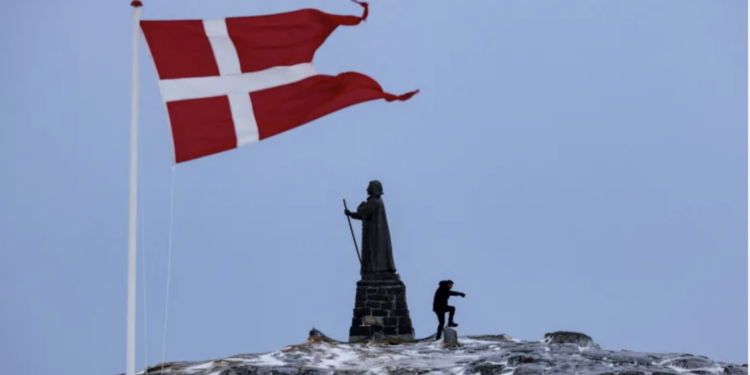
When U.S. President Donald Trump first suggested the United States should buy Greenland, Aaju Peter says she dismissed it outright. “In the beginning when Donald Trump said he wanted to buy Greenland, I just laughed it off because it was so absurd,” says Peter, a Greenlander who now lives in Iqaluit. “I now find it unsettling, and I don’t know the word in English, but it’s really a threat.”
Peter’s concern extends beyond her homeland. She fears that any successful attempt by the United States to annex Greenland could have consequences for Inuit communities across the Arctic, including in Canada’s North.
“Canada is right in the middle, between Greenland and the United States,” she says. “And he is going to want to take over Canada. Seeing a threat being made to the Inuit in Greenland is also a threat to us in Arctic Canada.”
The Trump administration has argued that controlling Greenland is necessary for U.S. national security, pointing to the Arctic’s growing strategic importance. Asked whether Canada’s Arctic territory could be next, U.S. Ambassador to Canada Pete Hoekstra downplayed the idea in an interview with CJAD Talk 800 host Elias Makos.
“We’re not moving to a point where we are disagreeing on how to protect the north,” Hoekstra said. “We are actually moving to a point where we are in lockstep.” As evidence, he cited a deal between Canada, the United States and Finland to jointly build icebreakers, describing it as an example of close cooperation between allies.
Canada has pledged billions of dollars in new defence spending, including investments aimed at protecting the North. But security experts say sovereignty cannot be asserted through military spending alone. Strong, resilient communities are equally essential.
“It’s really a whole-of-society approach,” says Gaëlle Rivard Piché, executive director of the CDA Institute, a security think tank. “Working with northerners, governments, Indigenous people who live in the region and making sure they have the same services.”
The Trump administration’s national security strategy outlines a broader vision of restoring American dominance in the Western Hemisphere. The document states that the United States will “reassert and enforce the Monroe Doctrine to restore American pre-eminence in the Western Hemisphere, and to protect our homeland and our access to key geographies throughout the region.”
While Trump’s actions in Venezuela and his threats toward countries such as Colombia and Mexico point to a shift in U.S. foreign policy, some experts warn that his rhetoric toward Denmark, a NATO ally, carries particularly serious risks. Greenland is an autonomous territory within the Kingdom of Denmark, and talk of annexation has alarmed European leaders.
“This is very in line with his modus operandi, but it is going to come at a terrible cost,” says Andrea Charron, director of the Centre for Defence and Security Studies at the University of Manitoba. “It calls into question the trust that is essential to a collective defence alliance like NATO continuing to exist and creates a rupture between the allies.”
Charron warns the fallout could extend well beyond the Arctic. If allies appear divided, adversaries may be emboldened to pursue their own regional ambitions.
“It really sends a signal to adversaries that we are in chaos and now is the time to take control of your spheres of influence,” she says. “This is sending the wrong message to what we call the CRINKs China, Russia, Iran and North Korea.”
As Danish and Greenlandic leaders urge the United States to back away from annexation threats, France and Germany have announced plans to send troops to Greenland at Denmark’s request. Canada also has military personnel in the territory, though the Department of National Defence says Canadian Forces members are participating in a previously planned annual training exercise, not as a response to the current tensions.
For people like Aaju Peter, however, the broader message is already clear. What once sounded like bluster now feels personal and potentially dangerous for Inuit communities across the Arctic.