Cyclone Ditwah: Sri Lanka’s Moment of Reckoning
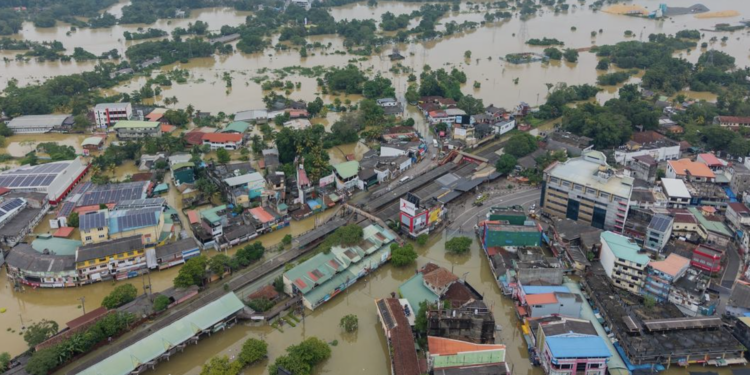
Cyclone Ditwah has plunged Sri Lanka into its gravest humanitarian crisis since the 2004 tsunami. Between 27 and 29 November, the storm unleashed relentless rain and wind across all 25 districts, overwhelming rivers, destabilising hillsides, tearing apart homes, and cutting off communities. One week later, the official toll stands at 618, while 209 people remain missing, and thousands injured. As rescue teams penetrate previously unreachable areas, the fatality count continues to rise, with some fearing it may eventually exceed a thousand.
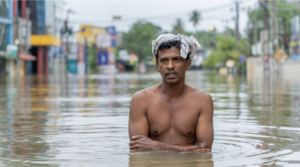
More than 1.5 million people have been affected. Over 41,000 homes are destroyed or damaged. 108 roads remain impassable and 40 bridges lie in ruins, isolating families and slowing the delivery of aid. Electricity, water, telecommunications, and transport networks have collapsed at varying degrees across the island. In response to opposition pressure, President Anura Kumara Dissanayake declared a nationwide state of emergency on 29 November.
This is not merely another monsoon disaster. As Vinya Ariyaratne of Sarvodaya observed, “The whole country is a disaster zone … whereas the tsunami struck only coastal areas.” The spatial footprint of destruction is unprecedented, cutting across class, ethnicity, religion, and geography.
A Climate Emergency Meets Institutional Fragility
Cyclone Ditwah was intensified by the warmer waters of the Indian Ocean a consequence of human-driven climate change. Scientific consensus is clear: rising sea surface temperatures supercharge cyclones, enabling them to carry more moisture, release more rainfall, and move more slowly across land. This combination maximises damage. As climate scientist Roxy Koll notes, storms in the region are now “carrying extraordinary amounts of moisture… unleashing rainfall that overwhelms rivers, destabilises slopes and triggers cascading disasters.”
Sri Lanka’s deforested hillsides, poorly regulated construction, and ageing infrastructure were catastrophically ill-prepared for such an event. In Badulla, Nuwara Eliya, Kandy, Puttalam, Mannar, Trincomalee, Colombo, and Gampaha, landslides and flash floods ripped through plantation estates, fishing villages, informal settlements, and working-class neighbourhoods. It is no coincidence that the worst-hit communities are the poorest: plantation families, marginal farmers, daily-wage workers, internal migrants, the elderly, people with disabilities, and queer and trans citizens living on society’s margins.
Disasters are never equalisers; they are magnifiers. Ditwah revealed what many prefer not to see Sri Lanka’s deep social fractures.
Warnings Were Issued. But Were They Heard?
From 21 November onward, multiple agencies issued weather warnings. The Meteorological Department forecast heavy rainfall; the Irrigation Department flagged flood risks in multiple basins; landslide alerts were expanded across the central highlands. By 24 November, a low-pressure system developing in the Bay of Bengal had been identified. Fishers were advised to stay ashore.
Yet the public’s response was muted partly due to warning fatigue, partly due to unclear communication, and partly because the state itself appeared unsure of how seriously to treat the threat. The Sri Lanka Tourism Development Authority even declared on 27 November that “Sri Lanka remains safe and open for travel.” Tourism has been positioned as a quick fix for foreign-exchange woes, and this may have influenced the tone of official messaging.
Compounding the problem, many warnings were issued only in Sinhala. Nearly four decades after Tamil was recognised as an official language, key agencies still fail to communicate in the language of millions of citizens. Tamil speaking communities in the North and East among the areas hardest hit were left to rely on volunteers and social media translators. Language discrimination, in the context of a natural disaster, becomes a matter of life and death.
Heroism Amid Dysfunction: A Tale of Two Responses
Once the full scale of Ditwah became evident, Sri Lanka’s public servants and security forces responded with courage and speed. Workers from the Road Development Authority and local government bodies cleared roads in dangerous conditions. Electricity Board crews restored power despite high winds. Health workers set up mobile clinics. District and divisional officials struggled to open shelters and distribute supplies.
The United Nations formally praised Sri Lanka’s response, commending the “rapid mobilisation of frontline personnel, the efficiency of local disaster coordinators, and the extraordinary level of community solidarity that prevented further casualties.” UN agencies highlighted the government’s early request for technical assistance and welcomed the coordinated deployment of military and civilian rescue teams.
But the UN’s praise, while deserved, does not erase the system’s vulnerabilities. Opposition parliamentarians claim that officials hesitated to release funds without explicit authorisation, fearing the anti-corruption scrutiny of the new NPP administration. Bureaucratic paralysis forced the President to revive the post of Commissioner-General for Essential Services to expedite decisions.
Meanwhile, ordinary citizens once again became the backbone of survival. Neighbours dug survivors out from landslides. Fishers transported boats inland to rescue the stranded. Community kitchens were revived. Volunteers built online tools within hours to map missing persons, shelter locations, and urgent needs. Aid convoys from the south reached the hill country before some state units did. Even prisoners donated their meals.
Yet distribution was uneven. Some communities received an oversupply of food and water while others waited days for basic help a sign of a relief system still lacking central coordination.
Debt, Austerity, and a Future of Recurring Emergencies
The most urgent question now is not merely how Sri Lanka responds today—but whether it can survive the climate future unfolding before us.
Austerity has hollowed out the state’s capacities. Disaster preparedness budgets have shrunk. Infrastructure has decayed. Social protection has withered. Communities most vulnerable to climate shocks are those least supported by public policy.
Former Maldivian president Mohamed Nasheed articulated the uncomfortable truth:
“It is now impossible for Sri Lanka to stay aligned with the IMF programme.”
IMF conditionalities designed for financial crises, not climate crises—require deep spending cuts at a moment when the country needs massive public investment. Opposition Leader Sajith Premadasa has called for easing or reshaping IMF conditions, while civil society groups demand an immediate debt standstill, a renegotiated programme, and a comprehensive loss-and-damage assessment led by affected communities.
Climate disasters are no longer rare events. They are annual—and accelerating. Sri Lanka cannot rebuild after each catastrophe with shrinking resources and deepening austerity.
What Must Change Before the Next Storm
Cyclone Ditwah should force a national reorientation. Sri Lanka needs a new social contract for a climate-changed era, built on:
- Universal social protection: cash transfers, nutrition programmes, housing assistance, and livelihood support must be dramatically expanded.
- Massive public investment in roads, bridges, irrigation, schools, hospitals, and climate-resilient housing.
- Nature-based solutions: mangrove restoration, wetland protection, river de-siltation, reforestation.
- Language-equal emergency communication for all communities.
- A disaster management system that prioritises preparedness, drills, and local empowerment not just post-event improvisation.
- Debt restructuring that recognises climate shocks as central not peripheral to economic sustainability.
A Final Wake-Up Call
Cyclone Ditwah revealed the country’s fragility, but also its capacity for solidarity. Whether Sri Lanka learns from this tragedy will determine how many lives are saved or lost in the next storm.
The climate crisis will not wait. The question is no longer if another Ditwah will come, but whether Sri Lanka will still be sleepwalking when it does.