A Textbook Error, a Political Firestorm, and the Future of Sri Lanka’s Education Reform
A single mistake in a Grade 6 English textbook has ignited an extraordinary political firestorm in Sri Lanka. What should have been addressed as a serious but contained quality-control failure has instead escalated into a full-blown political crisis, raising urgent questions about accountability, democratic discourse, and the sustainability of education reform in the country.
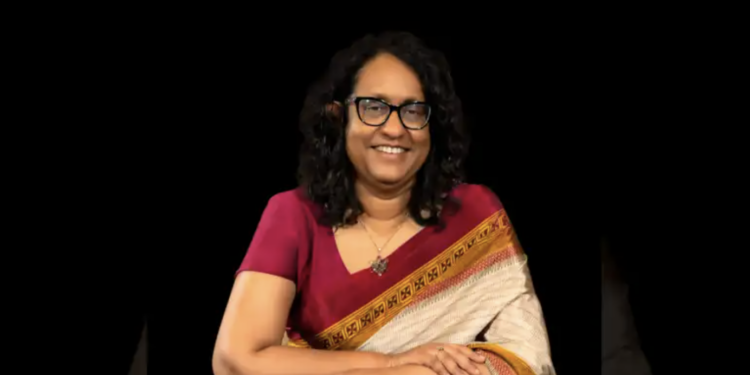
The error itself was grave. A website link included in a newly printed Grade 6 English module intended as an educational resource redirected users to an adult content site. The link appeared in three separate locations in the textbook, which was part of a broader set of education reforms introduced under the National People’s Power (NPP) government led by Prime Minister and Education Minister Dr. Harini Amarasuriya.
Before the textbooks reached students, social activists identified the problem. The government responded swiftly. Distribution was halted immediately, warehouse stocks were sealed, and telecommunications authorities were instructed to block access to the offending website. Addressing Parliament, the Prime Minister assured the country that no schoolchildren had accessed the modules.
There is no disputing the seriousness of the oversight. In an era where child protection must be paramount, such an error is inexcusable. The central question, however, is not whether the mistake was serious but how the state responds, learns, and reforms.
Multiple investigations were launched without delay. A three-member committee of Senior Additional Secretaries submitted a preliminary report within two days. A further inquiry headed by a retired Ministry Secretary was initiated, while the Ministry Secretary requested a Criminal Investigation Department probe to determine whether the error may have been the result of deliberate sabotage intended to embarrass the government. To ensure an impartial process, the head of the National Institute of Education (NIE) was asked to step down.
The NIE has since formally removed the controversial lesson, and revised modules are scheduled for distribution on January 21, 2026. Dr. Amarasuriya also announced structural changes, including transferring future textbook printing entirely to the Department of Educational Publications to strengthen oversight. The government further committed to developing a national policy on child protection in technology use and to ensuring that future modules would not rely on mandatory web links.
Investigations are ongoing, and the Prime Minister has assured Parliament that legal or disciplinary action will follow once responsibility is clearly established.
Yet the story took a troubling turn when the opposition, led by Mr. Sajith Premadasa, initiated a no-confidence motion against the Prime Minister. What began as a legitimate concern over child safety has morphed into something far more unsettling: a sustained campaign of personalised attacks that has crossed the boundaries of civility and decency.
Rather than focusing on policy failures, institutional safeguards, or systemic reform, much of the opposition’s rhetoric has targeted Dr. Amarasuriya personally. Many observers describe this as an organised effort to destabilise the government. Disturbingly, the attacks have become increasingly gendered, focusing on her identity as a woman in power rather than on her professional performance.
This is not unique to Sri Lanka. Julia Gillard faced similar treatment during her tenure as Prime Minister of Australia, highlighting a global pattern in which female leaders are subjected to disproportionate personal abuse instead of policy-based criticism. Recognising this pattern, however, does not make it acceptable, anywhere.
Lost amid the political theatre is a critical reality: Sri Lanka’s education system is in urgent need of reform. Despite the country’s historic achievements in literacy, the sector faces severe challenges: funding gaps, rural–urban disparities, outdated curricula, shortages in teacher training, and weak alignment with labour market needs. Sri Lanka continues to struggle to compete with knowledge-based economies, constrained by a limited STEM focus and inequitable access to quality education.
The 2026 National Agenda seeks to address these weaknesses by shifting toward competency-based learning and moving away from an exam-centric model. Proposed reforms include reducing daily subject periods, introducing activity-based learning for Grades 1 and 6, and implementing a uniform preschool curriculum from 2027.
Should this entire reform process be derailed by a single error, however serious? Absolutely not. But the incident does expose critical flaws particularly in quality control, stakeholder consultation, and transparency.
At its core, the textbook controversy reveals a fundamental problem: a closed-door approach to education reform is unsustainable. This was not merely a typo; it was a crisis of confidence. Future reforms must extend beyond bureaucratic circles and be subjected to rigorous public scrutiny. Educators, parents, religious leaders, child protection experts, and civil society groups all have a stake in shaping curricula that are both progressive and culturally sensitive.
Publishing reform proposals as white papers, opening them to public review, and institutionalising independent oversight would help prevent future failures while building trust. The ongoing investigations must also examine how this error slipped through a multi-layered review process and establish accountability at every stage.
Criticism of government action is not only a right but a democratic duty. The government, to its credit, acknowledged the error and welcomed investigations, positive steps toward transparency. But there is a vital distinction between legitimate criticism and destructive vilification. When political debate descends into gendered abuse and personal attacks, it corrodes democratic discourse and threatens social stability.
The campaign against the Prime Minister must stop. Destabilisation efforts by political right-wing groups, nationalists, fundamentalists, and extremists, often united by little more than their desire to overthrow a duly elected government represent a dangerous path. History offers sobering lessons about where such campaigns can lead.
Sri Lanka now stands at a crossroads. This crisis can serve as a catalyst for meaningful reform strengthening quality control, embracing transparency, and building broad consensus around education policy. Or it can become another casualty of political opportunism, sacrificing children’s futures on the altar of partisan warfare.
The Grade 6 textbook error is a stress test. It has exposed systemic weaknesses that demand correction. But the broader education reform agenda must not be destabilised by this failure. Instead, the lesson should be clear: inclusive vetting and open governance are essential to maintaining public trust while pursuing ambitious national goals.
The government’s sweeping electoral victory was unexpected, and the scale of its mandate appears to have caught its leadership unprepared. Policy articulation was slow, media engagement uneven, and early missteps inevitable. While such errors may be understandable during the customary 100-day “honeymoon” period, they cannot be indefinitely excused.
Sri Lanka needs constructive criticism that strengthens governance—not destructive attacks that imperil stability. Accountability for the textbook error must be enforced, but civil discourse and democratic norms must be defended with equal vigour.
The time to stop personal attacks is now. The time to build better systems is also now. Sri Lanka’s children, all of them deserve nothing less.