A Martyr and a Movement: The Political Reverberations of Charlie Kirk’s Death and the Battle for Free Speech
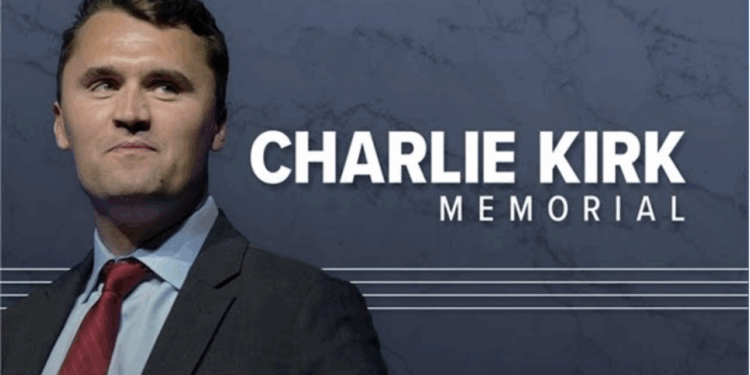
GLENDALE, ARIZONA – Beneath the soaring rafters of a packed State Farm Stadium, amid hymns of Christian rock and chants of “USA,” the conservative movement mourned one of its most polarizing figures, and reignited a fierce new chapter in the fight over free speech in America.
The memorial service for Charlie Kirk, the 31-year-old conservative activist and founder of Turning Point USA who was shot and killed at a Utah college campus event earlier this month, was both a solemn farewell and an unmistakable political rallying cry. In a display of raw emotion, ideological fervor, and religious symbolism, President Donald Trump declared Kirk a “martyr for American freedom,” blaming “radical left” ideology for the killing, despite law enforcement offering no confirmed motive.
“The violence comes largely from the left,” Trump said to roaring applause, adding, “We will not be silenced. We will not surrender. Charlie’s legacy will live on through us.”
A Freedom of Speech Flashpoint
Kirk’s death has become an explosive flashpoint in America’s ongoing war over free expression. To his critics, he was a provocateur who trafficked in incendiary rhetoric that marginalized vulnerable communities. To his supporters, he was a courageous truth-teller who defended the First Amendment and empowered young conservatives to speak freely in overwhelmingly liberal academic institutions.
Even in death, Kirk remains a divisive figure, and perhaps, as some at the memorial suggested, more powerful than ever.
“By trying to silence Charlie, his voice is now louder than ever,” said Tulsi Gabbard, Director of National Intelligence, in a somber yet defiant speech. “Political fanatics kill and terrorize their opponents hoping to silence them. But they have failed.”
Vice President JD Vance, speaking alongside other top administration officials, directly credited Kirk with energizing the youth vote that helped Trump return to the White House in 2024. “We wouldn’t be here without Charlie,” he said.
And Trump, always the showman, punctuated the service with a line that drew both gasps and cheers: “He did not hate his opponents. That’s where I disagreed with Charlie. I hate my opponents.”
A Nation Divided, A Movement Mobilized
Kirk’s killing, allegedly at the hands of a 22-year-old Utah college student, whose motives are still under investigation, comes amid rising fears of political violence in the United States. Both left- and right-wing actors have been implicated in recent years in violent acts, leading many analysts to warn of a deepening ideological instability.
But at Sunday’s service, calls for unity were rare. Instead, Trump and his allies leaned into the moment as a galvanizing event, a symbolic torch-passing from a fallen culture warrior to a movement that sees itself as under siege.
Stephen Miller, former senior White House adviser and longtime Trump loyalist, framed Kirk’s death as a transformative moment: “You have no idea the dragon you have awakened,” he warned. “We will save the West, save the republic, and we will do it in Charlie’s name.”
Kirk’s widow, Erika Kirk, now the CEO of Turning Point USA, delivered one of the most emotional speeches of the day, simultaneously offering a Christian message of forgiveness to her husband’s alleged killer, while urging the movement to persevere.
“My husband Charlie wanted to save young men, just like the one who took his life,” she said, tears streaking her face as she mouthed “I love you” skyward. “He left this world without regrets. He did 100% of what he could every day.”
A Crackdown on Dissent or a Defense of Liberty?
The ripple effects of Kirk’s death are already being felt in policy and media. Following controversial comments by Jimmy Kimmel on late-night TV, the Trump-appointed FCC Chair threatened sanctions against Walt Disney, sparking backlash from civil liberties groups who say the administration is exploiting the tragedy to silence dissent.
“The response to Kirk’s death threatens to become a cudgel for suppressing legitimate criticism under the guise of protecting speech,” warned the ACLU in a statement. “Weaponizing grief to muzzle opposition is itself an affront to free expression.”
Still, to Kirk’s allies, his legacy is a moral imperative.
“This is about whether or not we, as Americans, are allowed to speak freely without fear of violence,” said Jack Posobiec from the stage. “Charlie stood up for that right. Now it’s our turn.”
The Road Ahead
Kirk’s life and sudden death have come to symbolize a broader cultural battle over who gets to speak, and who pays the price for doing so. His supporters argue that conservatives have been vilified and silenced by a culture that punishes dissent, especially on college campuses. His critics see a man who contributed to that toxic environment through divisive, sometimes inflammatory rhetoric.
But one thing is clear: the First Amendment, and who gets to wield its power, has rarely been more contested.
As the stadium emptied, with thousands of mourners filing out to patriotic music under the Arizona sun, one attendee clutched a sign that read: “They tried to silence him. Now we speak louder.”
In death, Charlie Kirk has become a symbol. Whether that symbol stands for unshakable freedom or growing extremism may depend entirely on where one stands in America’s fractured public square.