A Diamond Jubilee of Resilience: Sri Lanka’s Economic Turnaround Hailed by IMF Chief
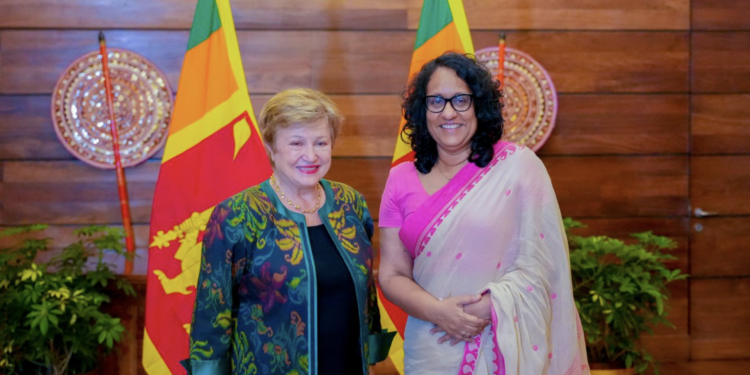
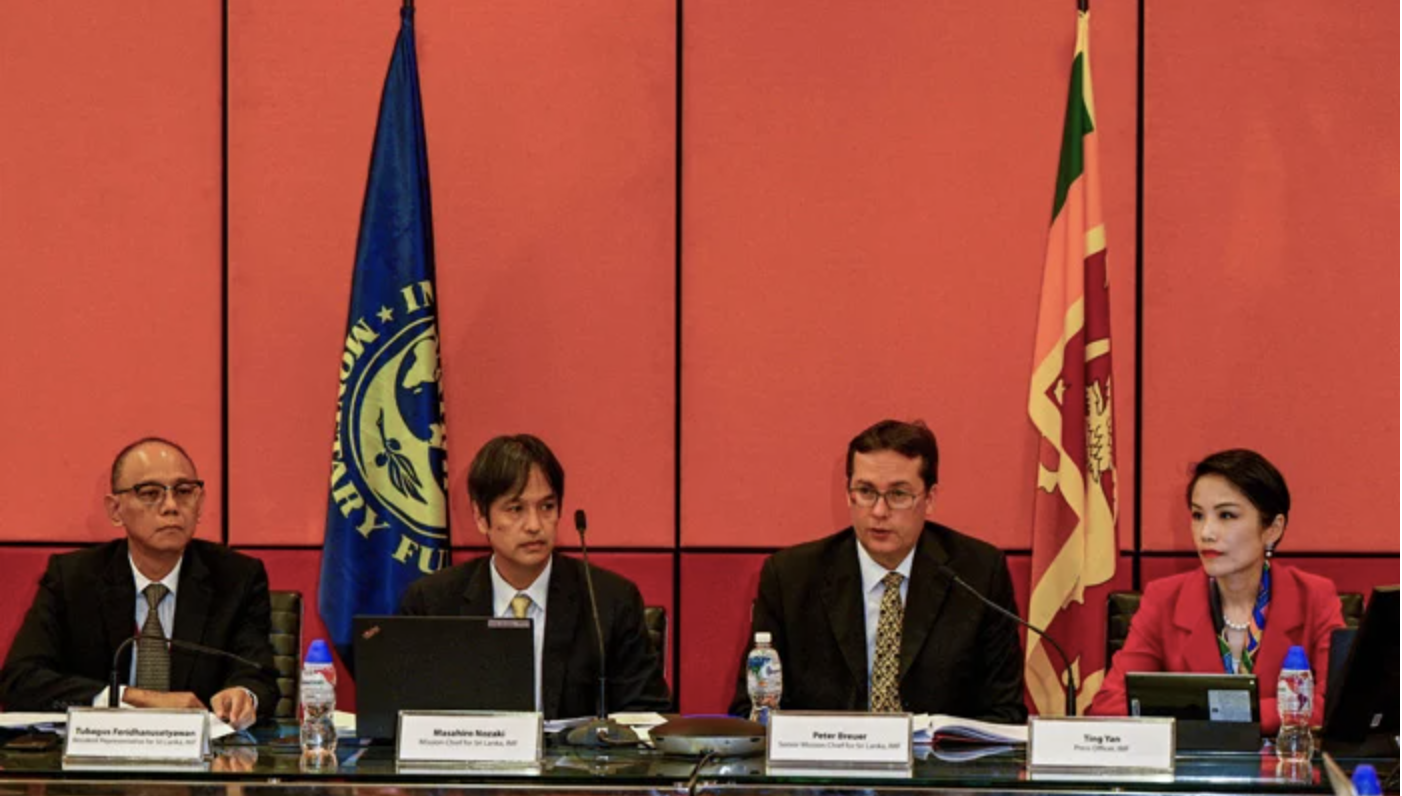
In a historic visit that underscores the nation’s remarkable journey from crisis to recovery, Dr. Kristalina Georgieva, the Managing Director of the International Monetary Fund (IMF), arrived at the Central Bank of Sri Lanka (CBSL) on February 17, 2026. This high-profile visit serves as a powerful validation of the Sri Lankan government’s fiscal discipline and the Central Bank’s strategic foresight.
The timing of the visit is symbolic, coinciding with the 75th anniversary of both Sri Lanka’s IMF membership and the establishment of the CBSL. More than just a celebration of longevity, the occasion highlights a modern “success story” of economic management under the most challenging circumstances.
From Hardship to Stability: A Success Story
During her meeting with Governor Dr. Nandalal Weerasinghe, Dr. Georgieva was unequivocal in her praise, describing Sri Lanka’s performance under the current Extended Fund Facility (EFF) as a model for the region. Her recognition of the country as a “success story” is a testament to the government’s unwavering commitment to structural reforms, which have transformed the economic landscape in just a few short years.
Key milestones achieved through this partnership include:
- Debt Restructuring: The successful completion of a complex debt restructuring process, restoring international confidence.
- Inflation Control: Bringing runaway inflation down from nearly 70% in 2022 to a stable target of approximately 5%, protecting the purchasing power of citizens.
- Revenue Growth: A dramatic increase in tax revenue—nearly doubling as a percentage of GDP—which has allowed the government to fund essential services and social safety nets.
- Reserve Accumulation: Foreign currency reserves have surged back to over $6.8 billion by early 2026, the highest level since before the crisis.
The Pillar of Progress: Central Bank Independence
Dr. Georgieva specifically acknowledged the Central Bank’s pivotal role in restoring macroeconomic stability. Since the enactment of the Central Bank Act of 2023, the institution has operated with greater autonomy, allowing for data-driven monetary policy and sophisticated macroprudential analysis.
The Governor expressed his gratitude for the IMF’s technical assistance in areas such as:
- Monetary Policy and Modelling: Enhancing the accuracy of economic forecasting.
- Financial Sector Policies: Strengthening the resilience of local banks.
- Governance: Implementing anti-corruption measures that ensure every rupee of public money is used effectively.
A Vision for Higher Growth
While acknowledging the “unprecedented economic hardship” the nation has endured, the IMF MD expressed deep confidence in Sri Lanka’s future. The message was clear: by sustaining the current momentum of structural reforms, the country is no longer merely “recovering” it is poised for transformative growth.
The government’s 2026 “Steady and Strong” budget reflects this optimism, balancing fiscal discipline with targeted relief, such as raising the personal income tax threshold to ease the burden on the middle class.
“Sri Lanka has emerged from the crisis across three fronts: growth, revenue, and inflation. Sustained progress remains the key to achieving our shared goal of a prosperous, resilient nation.”
As Sri Lanka celebrates 75 years of global financial partnership, the visit of Dr. Georgieva marks the beginning of a new chapter, one where Sri Lanka stands as a beacon of reform and a testament to the power of resilient governance.