Ukraine’s NATO Membership Raised in Talks as U.S. Floats Possible Donbas Withdrawal
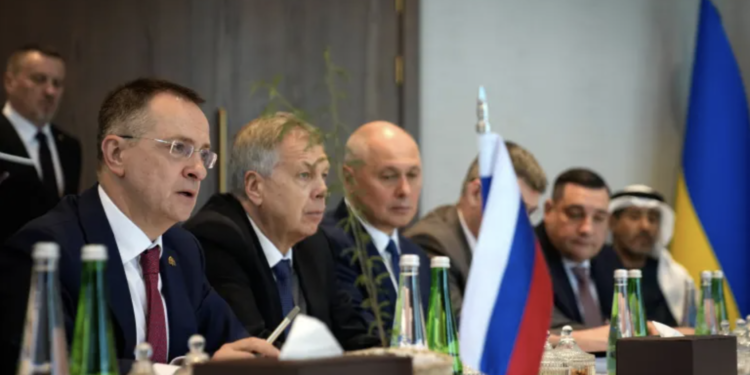
U.S. negotiators have reportedly raised the possibility of Ukraine withdrawing from parts of its eastern Donbas region in exchange for NATO membership, opening a new and highly sensitive dimension in efforts to end Russia’s war against Ukraine. Ukrainian President Volodymyr Zelenskyy revealed the proposal following the latest round of U.S.-brokered peace negotiations between Ukraine and Russia in Abu Dhabi. The discussions mark the first time a potential link between NATO membership and territorial concessions has been raised during the talks.
Speaking to reporters in remarks released by his office on Saturday, Zelenskyy said American negotiators had asked whether Ukraine would consider withdrawing from Donbas if it were offered NATO membership.
“The Americans raised a question: ‘What if Ukraine joins NATO? Would Ukraine withdraw from Donbas?’” Zelenskyy said.
He suggested that the proposal had brought NATO membership back into consideration as part of the broader negotiations, while acknowledging that the issue would be extremely difficult to resolve, given Russia’s longstanding opposition to Ukraine joining the military alliance.
Russian President Vladimir Putin has repeatedly described NATO expansion, particularly Ukraine’s potential membership, as a major security threat to Moscow. He has cited the issue among the justifications for launching Russia’s full-scale invasion of Ukraine in February 2022.
Zelenskyy Rejects Terr
itorial Concessions Without Guarantees
Despite the proposal, Zelenskyy reiterated that Ukraine was not prepared to voluntarily surrender its territory.
However, he indicated that a comprehensive peace package could potentially be submitted to the Ukrainian public through a national referendum.
Such an agreement, he explained, would need to include credible security guarantees, the right for Ukraine to maintain a strong and adequately funded military, and sufficient financial assistance to rebuild the country following years of devastating conflict.
His remarks suggest that Kyiv may be willing to consider difficult political compromises under certain conditions, but any agreement would have to protect Ukraine’s long-term sovereignty and security.
The possibility of exchanging territorial concessions for NATO membership also raises fundamental questions about the future of European security and whether such an arrangement would be acceptable to Moscow and Ukraine’s Western allies.
Zelenskyy Insists Ending the War Must Come First
Zelenskyy also rejected Russia’s proposal to negotiate a broader European security framework before reaching an agreement to end the war in Ukraine.
Echoing statements by European leaders at a summit in Dublin on Friday, he argued that discussions about restructuring the continent’s security arrangements should not take priority over ending the ongoing conflict.
“We cannot turn everything upside down and start by talking about changing the security framework in the world or across the continent overall, and only then talk about ending this war. This war must be ended first,” he said.
The disagreement highlights the contrasting approaches of Kyiv and Moscow. While Ukraine wants an immediate focus on ending hostilities and securing its future, Russia has continued to push for broader discussions about NATO, European security and the balance of power across the continent.
Dispute Over Humanitarian Ceasefire in Donetsk
The Ukrainian president also dismissed Putin’s suggestion of a localized humanitarian ceasefire in Kostiantynivka, a heavily contested city in the eastern Donetsk region.
Zelenskyy argued that Russia’s proposal was an attempt to secure control of the city after failing to capture it militarily.
“Putin simply wants us to leave Kostiantynivka so that they can move in and occupy the entire city that way,” he said.
He added that civilians in the city had already been given opportunities to evacuate.
Ukraine, meanwhile, has reportedly provided Russia with a list of seven or eight other frontline settlements where civilians, including children, remain trapped. Kyiv has proposed temporary humanitarian truces to allow residents to leave safely.
According to Zelenskyy, Moscow has instead shown a preference for treating these locations as military targets.
Russia denies deliberately targeting civilians in the conflict.
Prisoner Exchange Offers a Rare Sign of Progress
Although the two days of negotiations in Abu Dhabi ended on Wednesday without a major breakthrough on the central issues separating the two sides, the discussions produced an agreement in principle on a significant prisoner exchange.
Zelenskyy said the exchange would involve more than 1,000 people, although the final numbers were still being negotiated.
The proposed swap represents one of the few tangible outcomes of the latest diplomatic efforts and offers a rare sign of progress amid continuing disagreements over territory, security guarantees and the conditions for ending the war.
Meanwhile, U.S. peace envoys Steve Witkoff and Jared Kushner had promised to raise the possibility of an energy ceasefire with Putin during their meeting in Moscow on Thursday.
However, Zelenskyy said there had been no indication of progress following those discussions.
“Putin personally does not support a ceasefire,” he said.
Zelenskyy subsequently met with the two American envoys in Ireland on Thursday, following their visit to Moscow. He said the U.S. representatives had informed him that all parties had agreed to give Europe a place at the negotiating table in future peace discussions.
Europe Seeks a Greater Role in Peace Negotiations
Europe’s involvement remains another important issue in the diplomatic process. European countries have become Ukraine’s largest financial and military backers, making their participation in decisions about the country’s future particularly significant.
During the Abu Dhabi negotiations, European representatives met with American and Ukrainian officials but did not participate directly in discussions with Russian representatives.
That arrangement has raised questions about how effectively European security concerns and commitments can be represented in a process largely driven by Washington, Kyiv and Moscow.
At the Dublin summit, European Union leaders agreed that Europe’s negotiating delegation should include five major military powers: Britain, France, Germany, Italy and Poland, alongside EU officials.
Although Britain is not an EU member, its inclusion reflects its significant military and diplomatic role in supporting Ukraine.
A Difficult Road Ahead for Peace
The latest developments illustrate the enormous challenges facing efforts to negotiate an end to Russia’s war against Ukraine.
The possibility of linking NATO membership to a Ukrainian withdrawal from Donbas could represent a significant shift in the diplomatic discussions. However, it remains unclear whether Russia would accept such an arrangement, particularly given Putin’s repeated opposition to Ukraine joining NATO.
For Kyiv, the central challenge is finding a settlement that ends the fighting without leaving the country vulnerable to another Russian invasion. Zelenskyy’s insistence on security guarantees, military strength and reconstruction funding suggests that territorial questions cannot be separated from Ukraine’s long-term survival.
For Washington, the challenge is bringing the opposing sides toward an agreement while balancing Ukraine’s demands, Russia’s security claims and Europe’s concerns.
Despite the prisoner exchange agreement and continued diplomatic engagement, the Abu Dhabi talks have yet to produce a breakthrough on the fundamental disagreements driving the conflict.
The question now is whether NATO membership, territorial concessions and international security guarantees can form the basis of a workable peace agreement or whether these competing demands will continue to prevent a negotiated settlement.