Canada-U.S. Trade Talks Collapse as Tensions Escalate on Both Sides of the Border
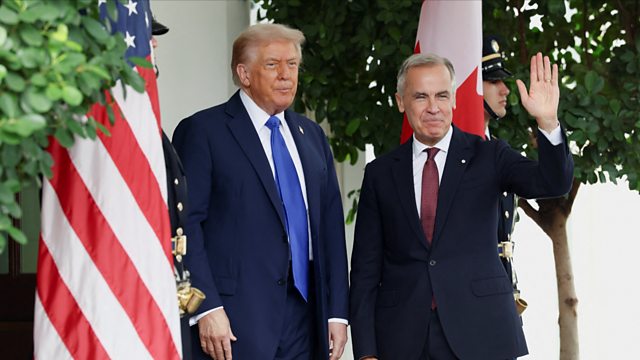
The fallout from the collapse of Canada-U.S. trade talks is intensifying on both sides of the border, with the U.S. President Donald Trump escalating his rhetoric while facing growing resistance at home to a broader trade war. Trump addressed the failed negotiations publicly for the first time overnight, criticizing the Canadian government in a social media post.
“Canada wants the benefits of being a State, without being one!!!,” Trump wrote, while also accusing Canada of imposing tariffs on American farmers for years.
The comments came as the dispute received significant attention across U.S. television networks Sunday. ABC News framed the confrontation as “Canada vs. the United States,” while NBC’s Meet the Press examined how much more pressure American consumers could absorb if the trade conflict continues.
U.S. Transportation Secretary Sean Duffy also adopted a confrontational tone, warning Canada against taking on the Trump administration.
“To think that they’re going to go to war with Donald Trump and actually win that war with the U.S. I think it’s foolish on their part,” Duffy told Fox News Sunday. However, Trump is also facing opposition within the United States. Former vice-president Mike Pence warned that a trade war with Canada would be particularly damaging at a time when the U.S. economy is recovering.
“I think the last thing we need right now as our economy is getting back on its feet is a trade war with Canada,” Pence told CNN’s State of the Union.
American business organizations have likewise expressed concern about further escalation. Industry groups have warned that tariffs could drive up costs for consumers and urged Canada and the United States to return to the negotiating table.
The dispute could ultimately test Trump’s support among the business community, particularly as corporate leaders become increasingly concerned about the economic consequences of prolonged tariffs. “Donald Trump cares about the business class. He cares about those billionaires,” Ham said. “They don’t want this and they’re speaking out.”
Canada prepares retaliation
In Canada, Prime Minister Mark Carney has promised a firm response to further U.S. tariffs, including dollar-for-dollar retaliatory tariffs on American goods. Those measures are scheduled to take effect Sept. 8, potentially creating a window for both governments to reconsider their positions and resume negotiations.
Former Liberal MP Ralph Goodale, who serves on the prime minister’s advisory council on Canada-U.S. economic relations, said the pause could provide Washington with an opportunity to rethink its approach.
“There may be an opportunity in this pause for the American side to regroup and to become a bit more coherent,” Goodale said. Carney has yet to release the complete list of Canadian products that would be subject to retaliatory tariffs.
Political commentator Scott Reid suggested that Canadians should prepare for a prolonged dispute, arguing that a meaningful agreement may depend on changing political circumstances in the United States.
“I think we’re in this for a while,” Reid said, adding that a deal could require “a weakened political position” in the United States and a stronger incentive for Washington to reach an agreement.
Conservatives demand transparency
Meanwhile, Canada’s federal Conservatives are demanding greater transparency from the government over the negotiations.
Conservative shadow minister for Canada-U.S. relations Shuvaloy Majumdar has written to Trade Minister Dominic LeBlanc requesting the release of the full details of the U.S. trade proposal that Canada rejected.
“If there was a draft text of any agreement that both governments have seen, please release it,” Majumdar wrote. “The U.S. administration has seen it. Your government has seen it. Canadians deserve to see it.” Majumdar said Sunday that Conservatives support Carney’s decision to walk away from the proposed agreement but want Canadians to have access to the facts behind that decision.
“Canadians are sick and tired of being used as a punching bag by President Trump,” he said, adding that Canadians want certainty and a tariff-free deal with the United States.
A high-stakes pause
The coming weeks could prove critical for both governments. Canada is preparing retaliatory measures while the Trump administration faces increasing pressure from American businesses, politicians and consumers concerned about the economic consequences of a prolonged trade conflict. The Sept. 8 implementation date for Canada’s retaliatory tariffs offers a potential opening for renewed negotiations. But with rhetoric hardening on both sides, there is little indication that a quick resolution is guaranteed.
For Canada, the challenge will be balancing economic retaliation with the need to preserve its most important trading relationship. For the United States, the political and economic costs of further escalation could become increasingly difficult to ignore.
Whether the current pause becomes an opportunity for compromise or the beginning of a much broader trade war may depend on which side concludes that returning to the negotiating table is in its own best interest.