Sri Lanka Elevated to Upper Middle-Income Status as Economic Recovery Gains Momentum
Colombo: Sri Lanka has been reclassified as an Upper Middle-Income country by the World Bank Group, marking a significant milestone in the nation’s economic recovery following years of financial turmoil. The upgrade comes after the country recorded a 5% real GDP growth in 2025, reflecting stronger macroeconomic performance and renewed growth momentum.
The World Bank Group classifies economies into four income categories. High Income, Upper Middle Income, Lower Middle Income, and Low Income based on gross national income (GNI) per capita. These classifications are reviewed and updated annually. Sri Lanka’s elevation from the Lower Middle-Income category signals an improvement in the country’s overall economic standing within the global economy.
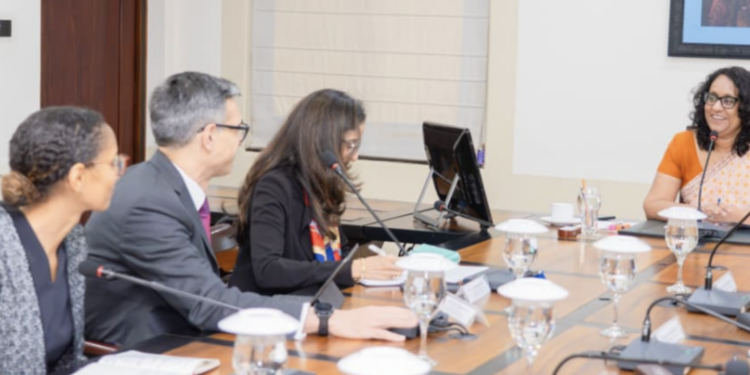
The announcement coincides with high-level discussions between representatives of the International Monetary Fund (IMF) and Prime Minister Dr. Harini Amarasuriya, held at Temple Trees on June 30, where both sides reviewed Sri Lanka’s economic progress and outlined priorities for the next phase of development.
Welcoming the IMF delegation, Prime Minister Amarasuriya expressed appreciation for the IMF’s continued support over the past one and a half years, emphasizing the importance of maintaining a strong and constructive partnership as Sri Lanka advances its economic reforms.
The Prime Minister noted that, despite the country’s encouraging recovery, growing global uncertainties require Sri Lanka to continuously adapt its economic strategy to ensure sustainable long-term growth. She stressed the need to strengthen sectors that are particularly vulnerable to global developments, including energy, ports, and agriculture, while enhancing the country’s resilience to external economic shocks.
IMF officials praised Sri Lanka’s remarkable economic turnaround, highlighting the significant progress made in stabilizing the economy and substantially reducing inflation. While acknowledging the challenges posed by the uncertain global economic environment, the IMF assured the Government that Sri Lanka is not alone in confronting these pressures and reaffirmed its commitment to supporting the country’s development priorities.
The discussions also focused on expanding trade, attracting foreign investment, strengthening social protection programmes, promoting inclusive economic growth, and improving national infrastructure.
Prime Minister Amarasuriya emphasized that economic growth and social protection must progress together, arguing that neither can succeed independently. She underscored the importance of investing in public infrastructure, particularly waste management and sewerage systems, while addressing existing human resource shortages that continue to affect effective public service delivery.
The IMF delegation included Deputy Director of the Asia and Pacific Department Ms. Sonali Jain-Chandra, IMF Mission Chief for Sri Lanka Mr. Evan Papageorgiou, and IMF Resident Representative to Sri Lanka Ms. Martha Woldemichael. Also participating in the meeting were Secretary to the Prime Minister Mr. Pradeep Saputhanthri, Senior Deputy Governor of the Central Bank Mrs. K M A N Daulagala, officials from the Central Bank, and Additional Secretary to the Prime Minister Ms. Sagarika Bogahawatta.
Sri Lanka’s elevation to Upper Middle-Income status, together with the IMF’s positive assessment of the country’s economic reforms, represents a significant milestone in its post-crisis recovery. However, both the Government and international partners acknowledge that sustaining growth, strengthening resilience, and ensuring that the benefits of economic recovery are shared across society will remain key priorities in the years ahead.