King Charles Walks a Diplomatic Tightrope in High-Stakes US Visit Amid Trump Tensions and Royal Shadows
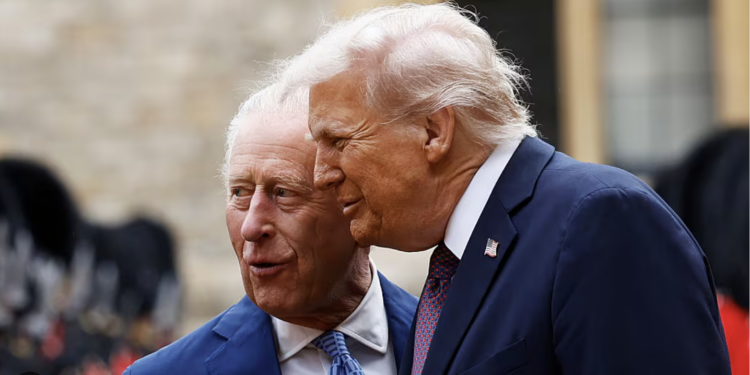
King Charles III’s upcoming state visit to the United States is shaping up to be one of the most delicate diplomatic missions of his reign, an intricate balancing act involving political volatility, personal sensitivities, and the enduring weight of history. Over four days, from April 27 to 30, the monarch will attempt to “reaffirm and renew” the UK-US relationship at a moment when it appears increasingly strained, all while navigating the unpredictable orbit of Donald Trump.
A visit unlike any other
Historians are already framing this as an unusually fraught royal engagement. Anthony Seldon describes the trip as having a “degree of difficulty” unmatched by any modern state visit. Comparisons stretch back to 1939, when George VI met Franklin D. Roosevelt in a bid to draw the United States into the Second World War.
The difference now lies in the personality at the center of the American presidency. Trump’s unpredictability combined with his sensitivity to perceived slights adds an unusual layer of risk. Yet paradoxically, Seldon suggests that Charles may enjoy a narrow advantage: Trump is unlikely to want to offend a monarch, potentially giving the king subtle diplomatic room to maneuver.
Still, the stakes are immense. The visit coincides with the 250th anniversary of American independence, a symbolic milestone that underscores both the shared history and the ideological divergence between the two nations.
Security concerns cast a shadow
Recent events have heightened tensions further. A shooting incident at the White House correspondents’ dinner prompting the evacuation of Trump and Melania Trump has triggered urgent reviews of the king’s security arrangements.
UK officials have emphasized that the monarch’s safety is being treated with utmost seriousness, with ongoing coordination between British and American teams. While heightened security is expected, it also underscores the uneasy atmosphere surrounding the visit.
A speech with global implications
Perhaps the most pivotal moment will be Charles’s address to a joint session of Congress. Televised worldwide, it may become the defining speech of his reign.
There is a delicate line to tread. When Elizabeth II addressed Congress in 1991, she spoke of democracy, NATO, and the dangers of power derived from violence. In today’s climate, such remarks could be interpreted as veiled criticism of Trump.
According to Philip Murphy, Charles is likely to aim his message beyond the president himself appealing instead to the American public. By emphasizing shared values like democracy, freedom, and the rule of law, he can reinforce the deep cultural bonds between the two nations without directly confronting the current administration.
The strategy, in essence, is to remind Americans that political leaders come and go, but the relationship between their countries is far more enduring.
Private diplomacy in a very public era
The king’s meeting with Trump in the Oval Office is expected to take place largely behind closed doors, a deliberate choice. Recent events, including the public humiliation of Volodymyr Zelenskyy in Washington, have underscored the risks of open diplomatic exchanges with Trump.
Charles enters these discussions aware of Trump’s past criticisms of the UK government and military as well as tensions involving Canada, where Charles is also head of state. Any attempt to address these issues will require exceptional tact, particularly given Trump’s well-known tendency to publicize private conversations.
Lingering controversies: Epstein and the Sussexes
Complicating matters further are issues that continue to haunt the royal family. The specter of Jeffrey Epstein and the scandal surrounding Prince Andrew remains a sensitive topic in American public discourse. Although activists have called for the king to meet survivors, palace sources indicate no such meeting will occur, citing ongoing legal considerations.
Meanwhile, the ever-present media focus on Prince Harry and Meghan Markle adds another layer of unpredictability. Based in California, the couple is not expected to reunite with Charles during the visit, but the possibility of untimely public commentary looms.
A test of monarchy in the modern age
For Charles, this visit represents more than ceremonial duty; it is a test of the monarchy’s relevance in complex geopolitical times. Amid controversies and political division, he has an opportunity to demonstrate that the crown can still serve as a stabilizing, unifying force.
If handled skillfully, the visit could reaffirm the deep ties between the two countries and subtly steer the narrative away from personal and political tensions. If misjudged, it risks exposing the monarchy to unprecedented scrutiny.
In a landscape defined by volatility, one thing is clear: this is diplomacy at its most precarious and potentially, its most consequential.