The Gulf’s Breaking Point: Iran’s High-Stakes Gamble in a New Middle East War
The Gulf states, long the shimmering bastions of stability in a volatile region, now find themselves on the jagged front line of the Middle East’s newest conflict. They are no longer just diplomatic mediators or energy providers; they are targets.
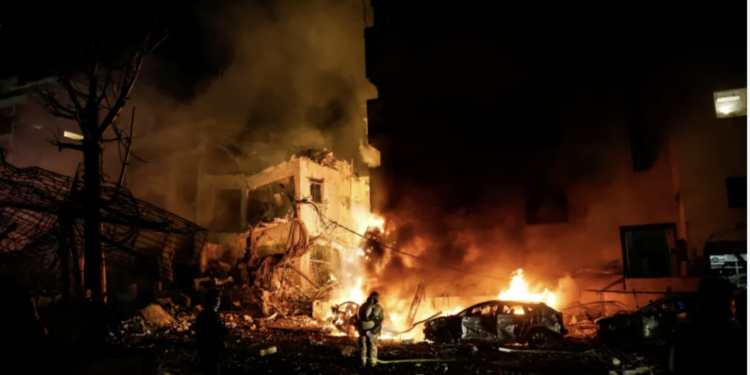
Iran has escalated its retaliation against U.S.-Israeli air strikes by launching hundreds of missiles and drones directly at its Arab neighbors. While the stated targets are American military installations on Gulf soil, the reality on the ground includes strikes on civilian infrastructure and vital energy hubs.
A Strategy of Chaos
Tehran’s objective appears to be a calculated dismantling of the Gulf’s hard-earned reputation as a safe, prosperous global center for finance, tourism, and travel. By turning the sky into a combat zone, Iran is attempting to:
- Disrupt the Global Economy: Targeting oil and gas infrastructure to trigger worldwide energy shocks.
- Leverage Instability: Forcing Arab governments to pressure Washington into ending the war.
- Sow Domestic Fear: Utilizing low-cost drones that, even when causing minimal physical damage, successfully paralyze trade and air travel.
“All Red Lines Have Been Crossed”
The diplomatic patience of the Gulf Cooperation Council (GCC) is visibly fraying. In a remarkably blunt press briefing on Tuesday, Qatari foreign ministry spokesman Majed al-Ansari signaled a shift in tone.
“The attacks on our sovereignty are constant,” al-Ansari told journalists. “When it comes to possible retaliation, all options are with our leadership… attacks like these will not go unanswered.”
While most projectiles are intercepted, the human and economic cost is mounting. Falling debris has ignited fires and claimed lives, while the United Arab Emirates, the region’s premier trade hub—has reportedly faced a barrage of drones and missiles nearly equal to that directed at Israel.
The Risk of Backfire
Iran’s strategy of “raising the stakes” carries the significant risk of a strategic own-goal. Rather than distancing themselves from the West, the Gulf states may be pushed into a tighter military embrace with Washington.
Historically, these nations have refused to let the U.S. use their airspace for offensive strikes against Iran. However, as “treacherous” attacks continue, that red line is blurring. The GCC comprising Saudi Arabia, Kuwait, Qatar, Bahrain, the UAE, and Oman held an emergency session on Sunday, pledging “all necessary measures” to protect their territories.
A Complex Geopolitical Balancing Act
Despite the anger toward Tehran, the path to joining a U.S.-Israeli military coalition is fraught with complications:
- The Gaza Factor: Israel’s destructive offensive in Gaza since October 2023 remains a source of deep public and political fury across the Arab world.
- Sovereignty Violations: Relations were further strained last year when Israel bombed Qatar in an assassination attempt against Hamas leadership.
- Regional Stability: Leaders like Anwar Gargash, advisor to the Emirati president, are still urging a diplomatic off-ramp. Posting on X, Gargash warned Tehran to “return to your surroundings” before the “circle of isolation and escalation widens.”
The Road Ahead
For now, the Gulf remains focused on defense. But as the war drags on and civilian infrastructure continues to smolder, the question is no longer if the Gulf states are involved, but how long they can remain reactive before they decide to strike back.