A Judicial Blow and a Swift Pivot
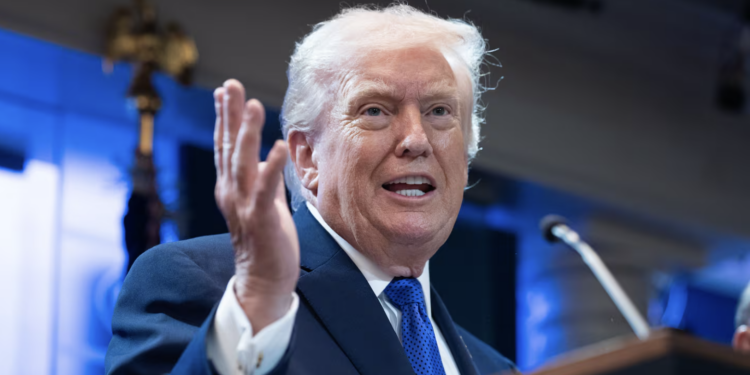
WASHINGTON D.C. In a weekend of high-stakes legal maneuvering and economic volatility, President Donald Trump has doubled down on his protectionist agenda. Just one day after the Supreme Court dismantled his initial trade policy, the President announced he is raising global tariffs from 10% to 15%—the maximum allowed under a rarely used 1974 statute.
The move marks a direct challenge to the judiciary and has sent shockwaves through global markets, leaving allies and domestic businesses scrambling to navigate a rapidly shifting trade landscape.
A Judicial Blow and a Swift Pivot
On Friday, the Supreme Court ruled 6-3 that the President’s previous blanket tariffs were unconstitutional. The Court concluded that the International Emergency Economic Powers Act (IEEPA) did not grant the executive branch the unilateral power to tax imports, asserting that such authority resides strictly with Congress.
Trump’s reaction was immediate and vitriolic. Labeling the justices “fools and lapdogs” and the decision “extraordinarily anti-American,” the President quickly pivoted to Section 122 of the Trade Act of 1974. This statute allows the President to impose temporary tariffs for up to 150 days to deal with large balance-of-payments deficits.
The New Tariff Landscape
| Feature | Previous Policy (Struck Down) | New Policy (Executive Order) |
| Legal Basis | IEEPA (Emergency Powers) | Section 122, Trade Act of 1974 |
| Tariff Rate | 10% | 15% (Statutory Maximum) |
| Duration | Indefinite | 150 Days (unless Congressionally extended) |
| Exemptions | Minimal | Critical minerals, metals, energy products |
The $133 Billion Question
The ruling has created a massive financial headache for the U.S. Treasury. Since the inception of the original trade regime, Washington has collected an estimated $133 billion in duties money that legal experts now say was collected unlawfully.
While larger corporations are expected to navigate the refund process successfully, John Diamond of Rice University warns that smaller firms face an uphill battle. “It’s pretty clear they will win in court, but it’ll take some time,” Diamond noted, adding that the process for smaller entities could be prohibitively “messy.”
Global Reaction: From “Fiasco” to Strategic Silence
The international community is grappling with a “turned upside down” trade environment.
- Germany: Chancellor Friedrich Merz has signaled he will coordinate a unified European response ahead of a scheduled meeting with Trump in March.
- Hong Kong: Financial Secretary Christopher Hiu was more blunt, describing the shifting policy landscape as a “fiasco.”
- Taiwan & The UK: Existing bilateral deals such as the U.S.-Taiwan agreement involving $85 billion in energy and aircraft purchases now face uncertainty as the administration insists these partners must honor their higher negotiated rates even if the “universal” rate fluctuates.
Political Firestorm at Home
The timing of the tariff hike is precarious. With the November midterm elections approaching, a recent Reuters/Ipsos poll shows only 34% approval for Trump’s handling of the economy.
Democrats have seized on the moment, accusing the President of bypassing the law to increase the cost of living for everyday Americans. The House Ways and Means Committee characterized the move as “pickpocketing the American people,” while California Governor Gavin Newsom claimed the President’s disregard for the Court proves “he does not care about you.”
Despite the outcry, Trump remains defiant on Truth Social, promising that his administration will continue to identify new “legally permissible” tariffs to further his “Make America Great Again” agenda.