Blessings, Photo-Ops, and the Dirty Feet They Forgot to Edit
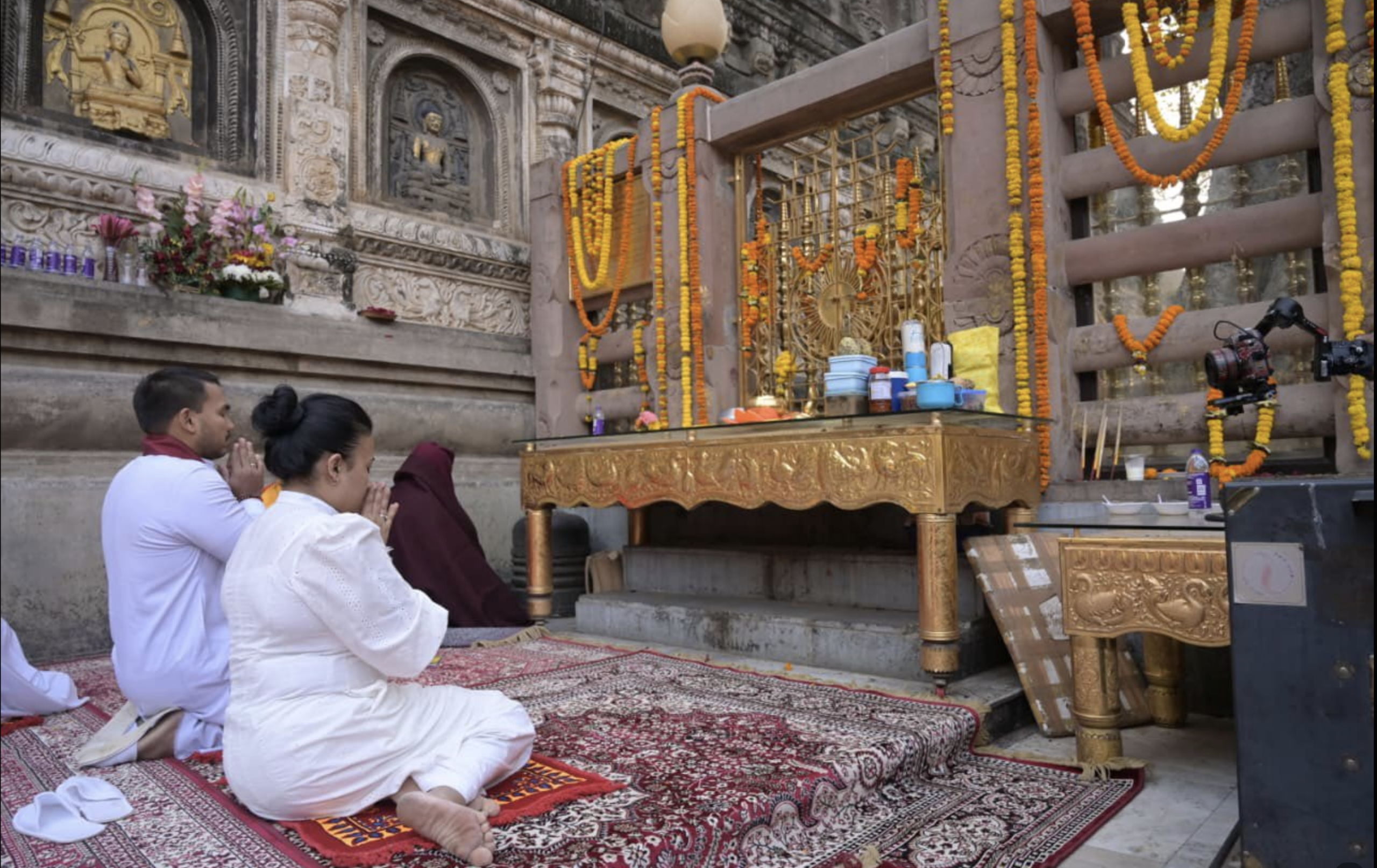
From Forest Dwellers to Holy Selfies: A Pilgrimage of Perfect Timing
Sri Lanka woke up this week to a spiritual revelation, delivered, as all modern epiphanies are, via X (formerly Twitter). Namal Rajapaksa announced that he and his wife had paid homage at the sacred Maha Bodhi Vihara, the very land of Lord Buddha’s enlightenment. Blessings were collected, reverence was displayed, and a courteous stop was made at the Maha Bodhi Society of India, founded in 1891 by Anagarika Dharmapala. One could almost hear the incense crackling through the Wi-Fi.
At first glance, this appeared to be a routine Rajapaksa ritual: pose, pray, post. The holy trinity of contemporary politics. But the timing was so divine that even Mahinda Rajapaksa might have raised an eyebrow. Why this sudden burst of enlightenment? Why now? Did the Bodhi tree send a calendar invite?
Then the penny dropped.
Back home, the chief incumbent of the Mihintale Rajamaha Viharaya, Ven. Walawahangunawewe Dhammarathana, was busy making appearances, not at almsgivings, but at the CID. This followed Minister K. D. Lal Kantha’s now-infamous reference to a “Mihintale Wanachariya,” loosely translated as “Forest Dweller of Mihintale.” No monk was named. No finger was pointed. Yet, as the saying goes, if the sandal fits, wear it preferably straight to the CID.
The monk’s ever-energetic lawyer soon thundered before the media, declaring the remark a “strategic and well-planned attack,” presumably hatched deep within the undergrowth of social media. Links were submitted. Names were handed over. The police were gently but firmly reminded that immediate action was not only possible but expected. This, after all, was not about personal offence. This was about safeguarding the Buddha Sasana. Naturally.
The monk himself struck a heroic pose, announcing he was undeterred by videos, statements, or one imagines memes. His CID visit, he insisted, was not personal, even if it looked personal, sounded personal, and involved him personally. Forgiveness, however, was generously offered, provided the minister apologized, behaved responsibly, and remembered he was paid by taxpayers. Mercy, it seems, comes with terms and conditions.
Enter Namal Rajapaksa, right on cue.
Overnight, Sri Lanka’s most famous political heir transformed into an international human rights lawyer, wielding the ICCPR Act No. 56 of 2007 with the confidence of a seasoned jurist. Lal Kantha, he declared, had violated international covenants and spread religious hatred. A single metaphor was elevated from rustic description to an existential threat against Buddhism itself.
One could almost admire the efficiency.
For decades, critics have accused the Rajapaksas of cultivating Sinhala-Buddhist sentiment like electoral fertilizer, spread generously before every poll. Allegations of majoritarian posturing and religious dog-whistling have followed them like temple drums during campaign season. Yet here was Namal, freshly blessed beneath the Bodhi tree, clutching an international treaty like a “pirith noola”, ready to defend the Maha Sangha from semantic violence.
And so, the mystery of the Maha Bodhi visit was solved. This was not a pilgrimage of faith; it was a pilgrimage of timing. When monks meet the CID and ministers collide with metaphors, Namal Rajapaksa meets the nearest sacred site, with a camera crew carefully positioned just outside the frame.
In the end, enlightenment may be elusive, but one truth shines brightly: in Sri Lankan politics, nothing clears the mind quite like a well-timed blessing. Especially when public outrage is trending, social media is overheating, and elections, though officially four years away, are spiritually, emotionally, and opportunistically always just around the corner.
Outrage fades. Memory resets. By the next election cycle, everyone will have been reborn as patriots, reformers, and victims of the previous government (including those who were the previous government). Until then, expect a steady supply of blessings, committees, slogans, and solemn promises carefully calibrated to last just long enough for the next scandal to arrive.
Because in Sri Lanka, elections don’t run on timelines.
They run on vibes.
And when the vibes get dangerous, a blessing, a photo-op, and a reminder that “the real fight is four years away” usually does the trick.