A New Dawn in Law Enforcement: Government’s Unyielding Stance on Underworld Crime Reclaims National Security
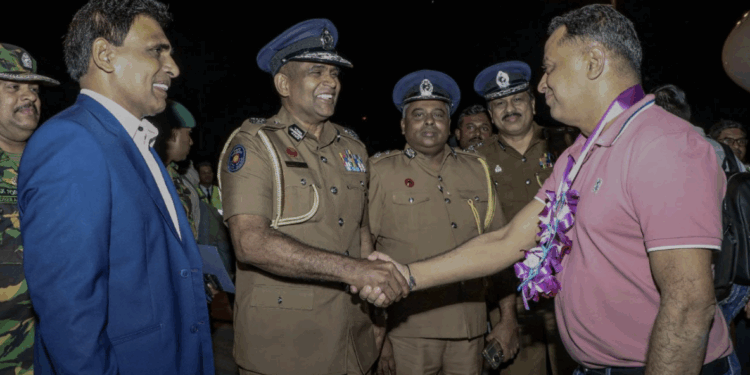
As Sri Lanka Police marks its 159th anniversary on September 3, the occasion arrives not as a mere commemoration, but as a powerful statement of purpose, action, and renewal. Under the leadership of President Anura Kumara Dissanayake’s Government, the nation has witnessed a transformative shift in its approach to law enforcement, one that has delivered not just results, but renewed hope.
Just months ago, the Sri Lanka Police appeared mired in controversy. Headlines were dominated by rampant shootings, internal corruption, and the alarming arrest of Colombo DIG Ujith Liyanage, a once-respected officer now facing serious criminal allegations. In this environment of eroded trust, the public rightfully questioned the integrity and effectiveness of the nation’s security apparatus.
And yet, in an extraordinary turnaround, the Government has delivered a resounding answer to its critics: unwavering resolve against organised crime, accountability within the force, and zero tolerance for impunity.
The dramatic capture of Sri Lanka’s most wanted criminal, Mandinu Padmasiri Perera, better known as Kehelbaddara Padme, is not just a victory for law enforcement; it is a landmark moment in the island’s fight against transnational organised crime. Orchestrated under the direct instructions of Inspector General of Police Priyantha Weerasooriya and executed by a fearless team led by ASP Rohan Olugala and CI Jayasundara, the week-long operation in Jakarta, Indonesia, was nothing short of historic.
This was more than an arrest, it was a dismantling of a myth. For years, Perera taunted the state, orchestrating killings from abroad, evading capture, and even issuing chilling threats to senior officers like Chief Inspector Linton Silva. His confidence reached such heights that he declared on live media that no Government could bring him to justice. He was wrong.
This success would not have been possible without the Government’s political will. Underworld figures like Perera thrived for decades not merely through fear and violence, but through political protection and systemic corruption. President Dissanayake’s administration, however, has drawn a clear line: no criminal enterprise will be tolerated, and no political connections will provide shelter.
IGP Weerasooriya himself acknowledged the shift, stating, “Underworld figures no longer enjoy the political protection they once did.” This statement is more than symbolic, it reflects a tectonic change in the political culture of Sri Lanka. The state is reclaiming its authority.
The operation also reflects the emergence of a professionalised and globally capable police force. The fact that Sri Lankan officers were able to successfully coordinate a transnational operation in collaboration with Indonesian authorities, while working in extreme conditions and unfamiliar territory, is a testament to the bravery, discipline, and evolving competence of the force. These are officers who slept under footbridges and subsisted on one meal a day, driven not by orders, but by an unrelenting commitment to justice.
And this is only the beginning. The Government has made clear its intent to go beyond high-profile arrests and dismantle the entire criminal infrastructure. From tracing illegal assets to prosecuting second-tier operatives, the crackdown is methodical, relentless, and backed at the highest levels.
Perhaps most importantly, the administration has pledged to investigate the links between politicians and the criminal underworld, an area long considered taboo. This is a courageous step, and one that signals a true departure from the past.
In a nation where 42 people have already been killed in 80 gang-related shootings this year alone, the stakes could not be higher. But this latest operation proves that the rule of law is no longer just an aspiration, it is an active force.
The people of Sri Lanka can take comfort in knowing that justice is not a distant concept but a living, breathing pursuit, guided by leadership that acts, institutions that deliver, and officers who serve with integrity and courage.
As we mark 159 years of the Sri Lanka Police, this year stands apart. Not merely for its history, but for the future it promises. A future where fear does not rule the streets. A future where crime does not go unanswered. And a future where the Government stands, unequivocally, on the side of justice.
This is more than an anniversary, it is a new beginning.