Partial Hartal in Sri Lanka’s North-East Fizzles Amid Mixed Response and Political Fatigue
A much-anticipated hartal in Sri Lanka’s Northern and Eastern provinces, called in protest over the recent death of a youth near the vacated Muththayankattu army camp in Mullaitivu, largely failed to generate widespread support on Monday, exposing the limitations of political mobilisation in the region.
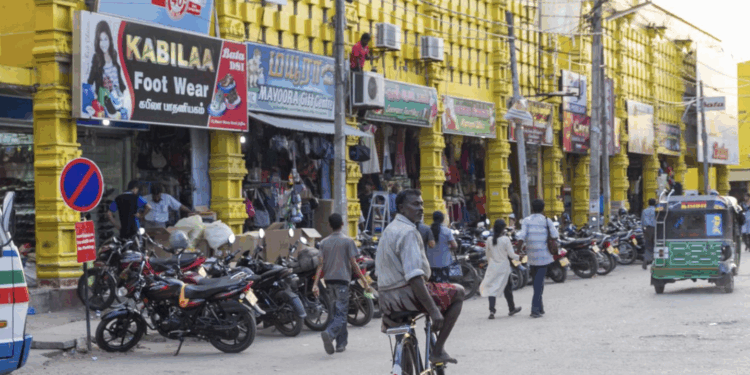
Despite calls by several Tamil political groups, including the Ilankai Tamil Arasu Kachchi (ITAK), to observe a complete shutdown, life in most towns and cities across the North and East continued with little disruption. Government offices and schools remained open, public servants reported to duty as usual, and public transport operated without interruption.
While a handful of trade associations expressed solidarity with the hartal, many others openly distanced themselves, citing the protest as a “politically motivated move” lacking public legitimacy. In Jaffna, Vavuniya, and Trincomalee, daily routines unfolded with minimal impact.
In contrast, some areas of Batticaloa, particularly in Tamil-majority localities like Cheddipalayam, Arayampathi, Valachchenai, and Kokkatticholai, saw limited participation, with some shops and businesses keeping their shutters down. However, Muslim-majority towns in the East remained largely unaffected, as local leaders and business owners backed the National People’s Power (NPP) government’s stance to boycott the hartal.
Security forces maintained a visible but restrained presence across key urban centres. Although minor inconveniences were reported, there were no major incidents of unrest or violence.
The Incident Behind the Protest
The hartal stemmed from a recent incident at the former site of the 12th Sinha Regiment camp in Muththayankattu, Oddusuddan. The camp, vacated as part of an ongoing military relocation programme, became the focus of controversy after five civilians allegedly trespassed onto the premises. In the process of removing them, one man drowned in the adjacent Muththayankattu tank.
While government officials insist the death was accidental, opposition parties and activist groups claim the victim was assaulted before drowning. These allegations prompted the arrest of one soldier shortly after the incident. Two more soldiers were later taken into custody, and all three are now remanded pending a formal investigation.
Accusations of Political Exploitation
Amid growing calls for accountability, government spokespersons have warned against what they describe as “deliberate attempts to misrepresent the facts.” Minister of State, Dr. Jayatissa, criticised the hartal organisers, accusing them of leveraging tragedy for political purposes.
“These efforts to weaponise tragedy for political gain are deeply irresponsible,” he said in a statement. “We ask the people to act calmly and peacefully, and not to be manipulated by those who thrive on conflict.”
A Protest That Missed the Mark?
Despite being billed as a show of solidarity and defiance, Monday’s hartal appears to have underscored a deeper political reality: the growing apathy and disconnect between grassroots populations and traditional Tamil political leadership.
In many parts of the North and East, the protest failed to resonate — a sign, analysts say, of political fatigue and scepticism about the motives behind such mobilisation.
What was intended to be a region-wide shutdown ended up as a fragmented and largely symbolic protest, observed by a few, ignored by many, and quietly fading from the public discourse.
As investigations continue into the Mullaitivu incident, it remains to be seen whether justice or accountability will be delivered, but the hartal itself has raised pressing questions about representation, relevance, and the evolving political landscape of Sri Lanka’s former war zones.